What Happens When a Security Guard Catches a Shoplifter?

If you’re a retail store owner, employee, or just curious about retail security, you may have wondered what happens when a security guard catches a shoplifter.
When handling shoplifting incidents, retail security guards in Canada follow procedures according to Canadian law and the retailer’s internal policies. This helps keep customers safe and reduces liability for the guard and the store they represent.
This blog will cover what security guards are allowed to do when apprehending shoplifters in Canada, the process for what happens when a shoplifter is caught, and what happens afterward.
Key Takeaways
- In Canada, security guards have the same arrest powers as any citizen, and they can use only the level of force reasonable for the situation.
- Before approaching anyone, retail security guards confirm a theft using the five steps of theft.
- Many shoplifting incidents end with the merchandise being recovered and the person being banned from the store, while others lead to an arrest and police involvement.
- Blackbird Security guards prioritize peaceful de-escalation and a hands-off approach whenever possible.

What Can Retail Security Guards Do in Canada?
Security guards don’t have the same power to arrest individuals as police officers. Instead, their authority comes from the same citizen’s arrest laws that apply to any Canadian. This means guards can:
- Arrest someone they see committing a criminal offence, such as theft, on the property they’re protecting.
- Use only as much force as is reasonable and necessary.
Security guards typically also have the legal right to issue a trespass notice banning someone from the property.
Anyone who makes a citizen’s arrest must hand the person over to police immediately. This means retail security guards must contact the police immediately and wait for their arrival, ensuring the subject doesn’t leave the area.
Can Security Guards Trespass Individuals?
Some provinces grant additional trespassing authority, such as Ontario’s Trespass to Property Act and Alberta’s Trespass to Premises Act. Security guards should know their province’s trespass laws, and reputable security companies provide additional training in this area.
Guards must also respect the Canadian Charter of Rights and Freedoms, which protects against unreasonable searches and arbitrary detention.
For a detailed look at arrests, read our blog, How Retail Security Guards Apprehend a Subject.
Before a Shoplifter Is Caught: The 5 Steps of Theft
Before a guard approaches a subject, they must be sure a theft has occurred. Retail security guards and loss prevention operatives (LPOs) in Canada use a method called the five steps of theft to confirm whether an individual is committing a theft.
The five steps of theft are:
- Selection. Seeing the person pick up an item.
- Concealment. Seeing them hide it in a pocket, bag, or clothing.
- Continuous observation. Keeping them in sight to make sure they don’t put the item back.
- Passing the point of sale. Seeing them pass the checkout area without paying.
- Attempting to leave the store. Seeing them exit or attempt to exit the store.
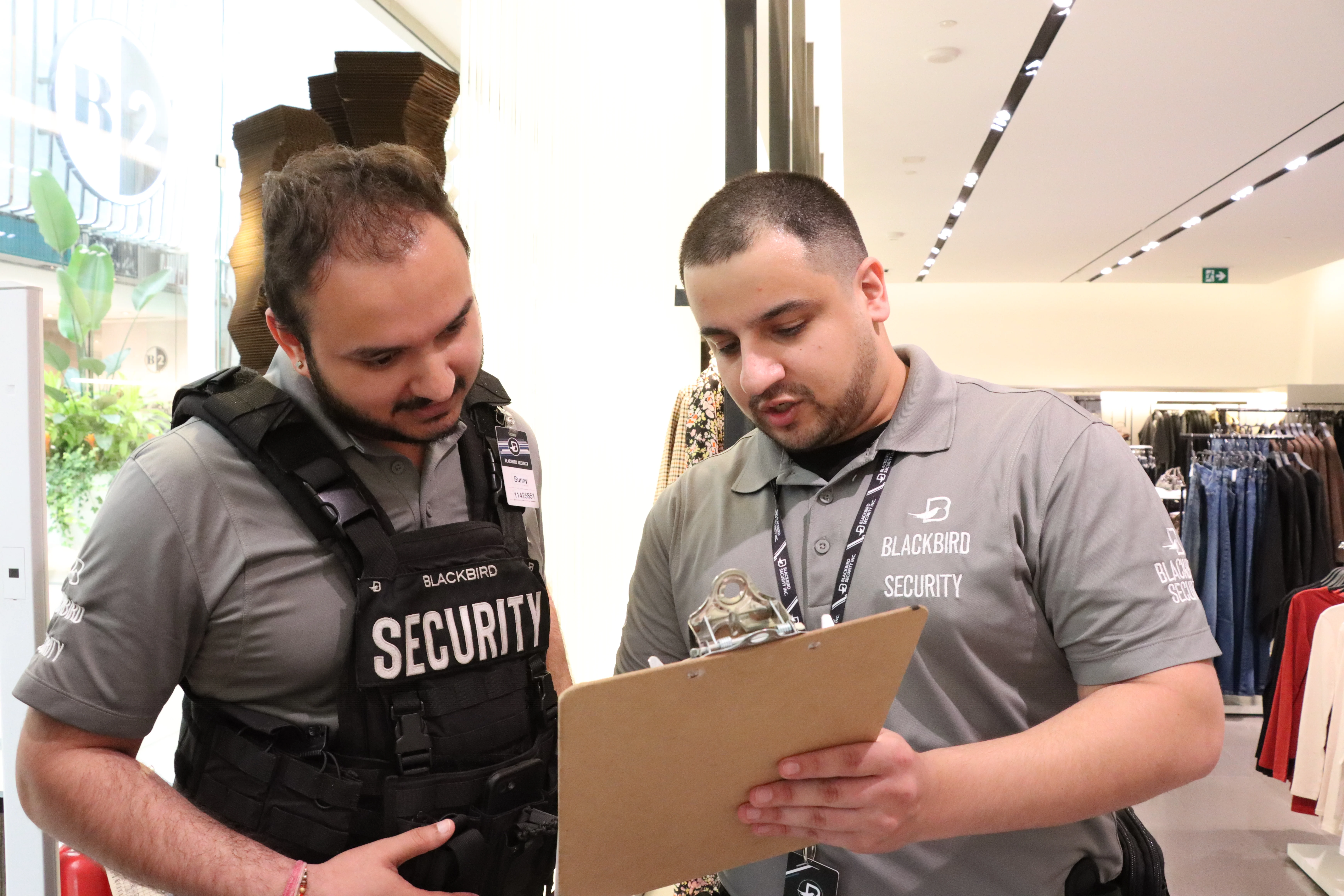
Guards only approach once all five steps have happened in order. If they approach too early, the person could say they were still shopping or waiting for someone to pay. Missing even one step can lead to a dismissed case or the store being held liable.
What Happens When a Shoplifter Is Caught
Once a guard has confirmed a theft, the incident usually goes one of two ways. The guard either recovers the merchandise and bans the person from the store, or makes an arrest and calls police. The path the guard takes depends on the retailer’s policies, the situation, and the safety of other customers.
Outcome 1: Recovering the Merchandise and Issuing a Trespass Notice
In most cases, the goal is to get the merchandise back safely without escalating the situation. This typically looks like a retail security guard:
- Approaching the person as they’re exiting the store.
- Identifying themselves as retail security.
- Calmly explaining what they saw, including the taken item and where the person is concealing it.
- Asking the person to return the item, firmly and politely repeating the request until they comply.
- Issuing a trespass notice banning the person from the store.
- Releasing the person.
If the person returns to the store after being trespassed, they can be arrested for trespassing. If a retail security guard sees someone returning to the store after being trespassed, they can contact police.
Watch our team demonstrate this process in action in our previous blog, How Retail Security Guards & LPOs Stop Shoplifters.
Outcome 2: Making an Arrest
If store policy allows it and an arrest is necessary, guards follow a process to make the arrest safely and lawfully. They will:
- Identify themselves by stating their name and role.
- Issue a notice of arrest by informing the person they’re under arrest, explaining why, and naming the offence they committed.
- Use reasonable force or restraints when needed and bring the person to a secure area, often the loss prevention office at a store.
- Contact police and keep the person in a secure area until officers arrive.
These steps can vary depending on the province or the store’s policy. Reputable retail security companies provide their guards with training to ensure arrests are conducted lawfully, reducing liability for stores.
When Do Guards Choose to Make an Arrest vs. Issue a Trespass?
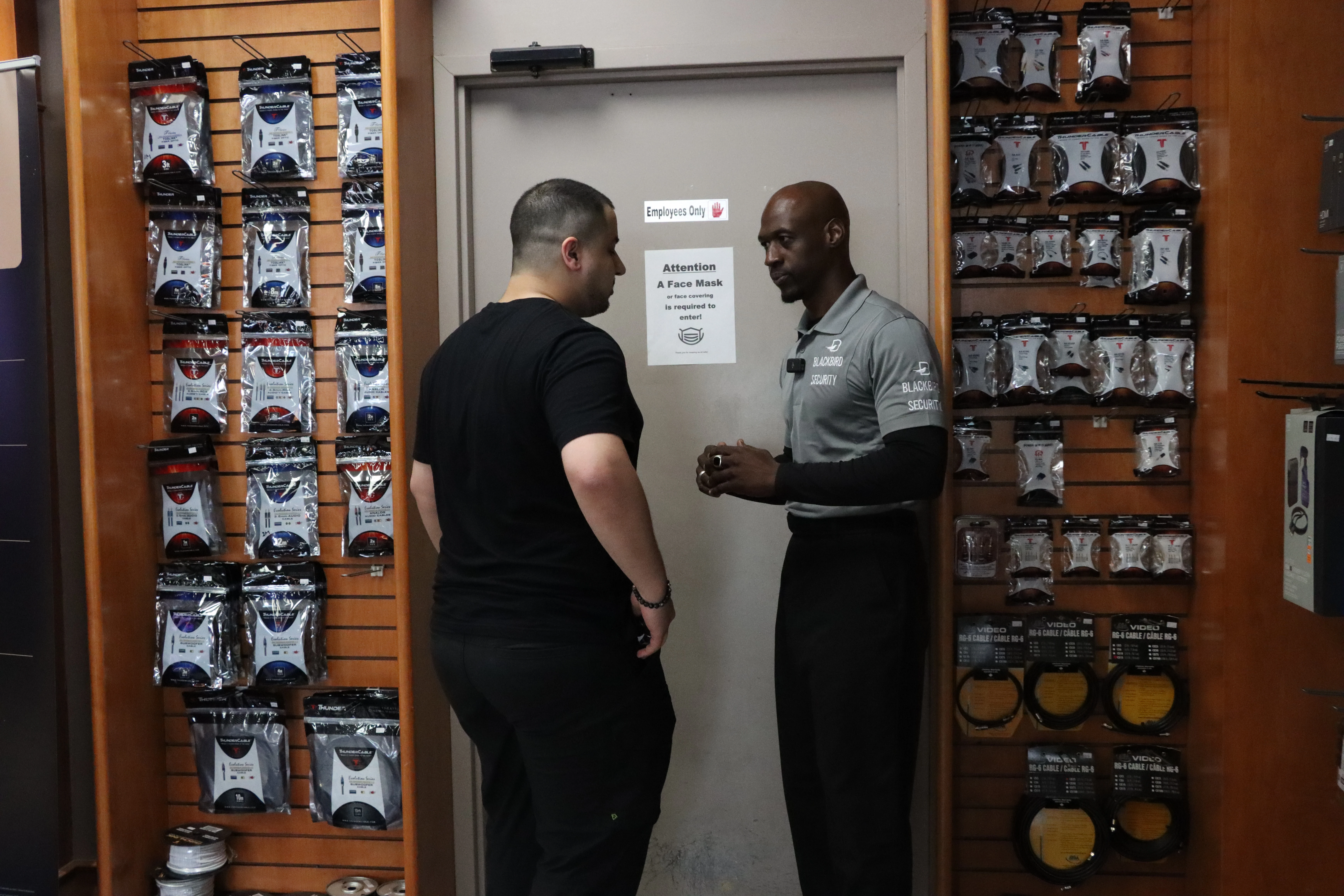
Recovering the merchandise and issuing a trespass notice is often the safer, quicker option because it resolves the incident with less risk to everyone involved. Whether a guard makes an arrest instead depends on factors, including:
- The retailer’s policies.
- The guard’s post orders.
- Whether the person responds with aggression when approached.
- The value of the stolen items.
At Blackbird Security, guards prioritize peaceful de-escalation and use a hands-on approach only in emergencies, such as self-defence or protecting someone else.
In some situations, though, the safest choice is not to approach the person at all.
When Security Guards Choose Not to Intervene
In some dangerous situations where shoppers' and store employees' safety is threatened, guards may choose to observe and report instead of intervening or confronting the individual in order to avoid escalating the situation. These scenarios include:
- The person appears to have a weapon.
- The person is acting aggressively or seems likely to become violent.
- The theft involves a group, which is typically the case with organized retail crime.
- Approaching would put staff or shoppers at risk.
In these situations, detailed reports and video footage help police build cases. More than 75% of Canadian retailers report increased violence during theft incidents, which is why safety comes first. The goal of retail security is to minimize risks for bystanders, and often, a non-confrontational approach is the right move.
How Security Guards Respond to Organized Retail Crime
Organized retail crime (ORC) is different from opportunistic shoplifting. Instead of one person stealing for personal use, ORC involves groups working together to steal merchandise and resell it for profit.
As confronting perpetrators of ORC or attempting to stop organized thefts in action can be dangerous, security guards and store staff focus on keeping store staff and shoppers safe during ORC incidents. This typically means:
- Ensuring everyone keeps a safe distance from the group.
- Contacting police.
- Using de-escalation if an interaction can’t be avoided.
- Observing and documenting the incident, including descriptions of people involved, vehicles, and items taken.
- Preserving video footage and sharing reports with police.
What might look like inaction from a security guard is often the first step in building a case. Since ORC groups tend to target multiple stores, detailed reports help police connect incidents across different locations and dates.
To learn more about how Blackbird Security is working with retailers and police to fight ORC, read our blog about the organized retail crime workshop we hosted in Ontario.
What Happens After the Incident?
However the incident is handled, the security team must create a detailed incident report afterward. A thorough incident report typically includes:
- A detailed account of the incident.
- The actions taken by the security team.
- The time of the arrest.
- Any physical action that took place.
- Police details, if applicable, including officer names, badge numbers, and the case number.
- The outcome of the incident.
Video footage and witness details must be saved and shared with police if requested. If the case goes to court, the report and video evidence support the prosecution.
Partner With Canada’s Most Trusted Security Company
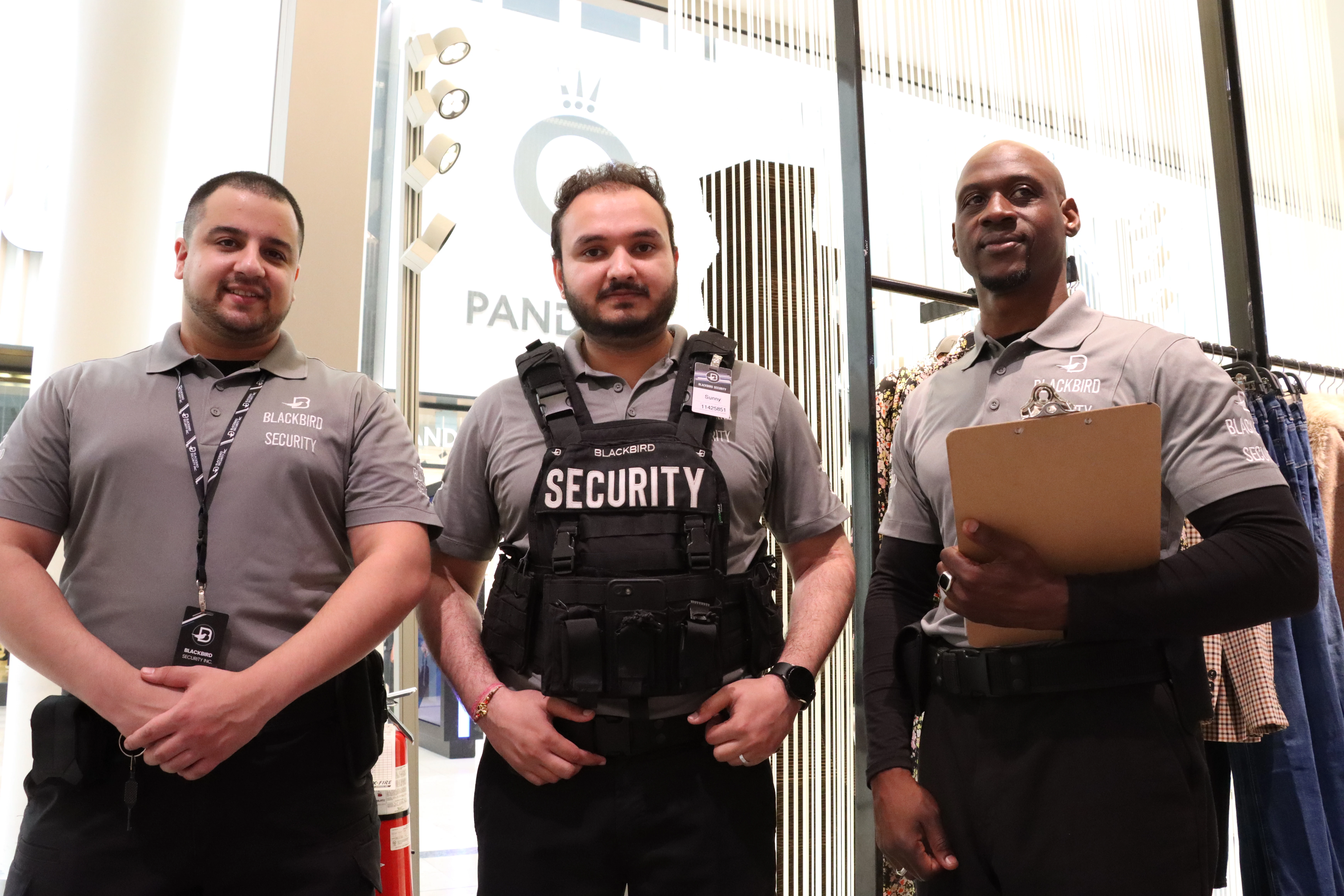
A well-trained retail security guard handles shoplifting calmly, lawfully, and with everyone’s safety in mind. Blackbird Security’s loss prevention teams protect retailers while keeping stores safe and welcoming for shoppers.
We’re proud to partner with brands across Canada, including Sephora, MEC, Canadian Tire, Best Buy, and many more. This year, we’re actively helping retailers and loss prevention teams prevent and respond to organized retail crime through workshops in Ontario.
Contact us today to learn how our retail security and loss prevention services can help protect your store.
FAQ
Can security guards arrest shoplifters in Canada?
Yes. In Canada, security guards have the same citizen’s arrest powers as any citizen, so they can arrest someone they see committing a theft on the property they’re protecting.
What is a trespass notice?
A trespass notice is a formal ban that prohibits someone from returning to a property or store. Security guards can issue a trespass notice under provincial trespass laws on the property owner's behalf. If the person comes back while the notice is in effect, they can be removed or arrested for trespassing.
Why don’t security guards always stop shoplifters?
Safety is always the top priority. If a shoplifter has a weapon, is aggressive, or is part of a group, approaching them could put staff and shoppers in danger. In these situations, guards observe the incident and write a detailed report afterward, which helps police build a case.
Does Blackbird Security provide loss prevention services?
Yes. Blackbird Security provides retail security and loss prevention services to retailers across Canada.

More Articles
Frequently Asked Questions
Key KPIs to track include:
- Incident response times: Faster responses to alarms or emergencies.
- Reduction in theft/vandalism: Compare loss data before and after implementation.
- Patrol compliance: Track patrol frequency and adherence via GPS or logs.
- False alarm rates: Lower rates ensure focus on real threats.
- Client/Employee satisfaction: Gather feedback to measure confidence in security.
- Client services: Dedicated account representative who supports ongoing needs & can adjust strategy as needed
- Allowing access to our 24/7 Control centre for all clients, which is based out of our head office in Vancouver, BC. Clients can call this centre and have a mobile guard swiftly deployed to their business for any spontaneous incidents that occur. We believe in operating it inhouse to ensure all services are streamlined and optimized for the best communication. Our control canter can be reached at this number for current clients: 1-888-991-2622.
- We have a dedicated client services team which directly communicates with clients on a day-to-day basis. Our client services often perform site check ups and can assist with any issues that arise at your business.
Your peace of mind is our priority. We’re more than a service provider—we’re a partner in protecting your business. With our team working tirelessly to anticipate and resolve challenges, you can focus on running your business with confidence, knowing we’re always here to support you. Together, we build safer environments and stronger partnerships, every step of the way.
Secure Your Operation Today