Blackbird Security Hosts Organized Retail Crime Workshop: A Collective Solution to an Industry-Wide Problem
Organized retail crime impacts thousands of retailers across Canada, and the problem is growing. The solution? A network of retail security professionals from Canada’s top retail businesses coming together to share insights and learnings to combat ORC.
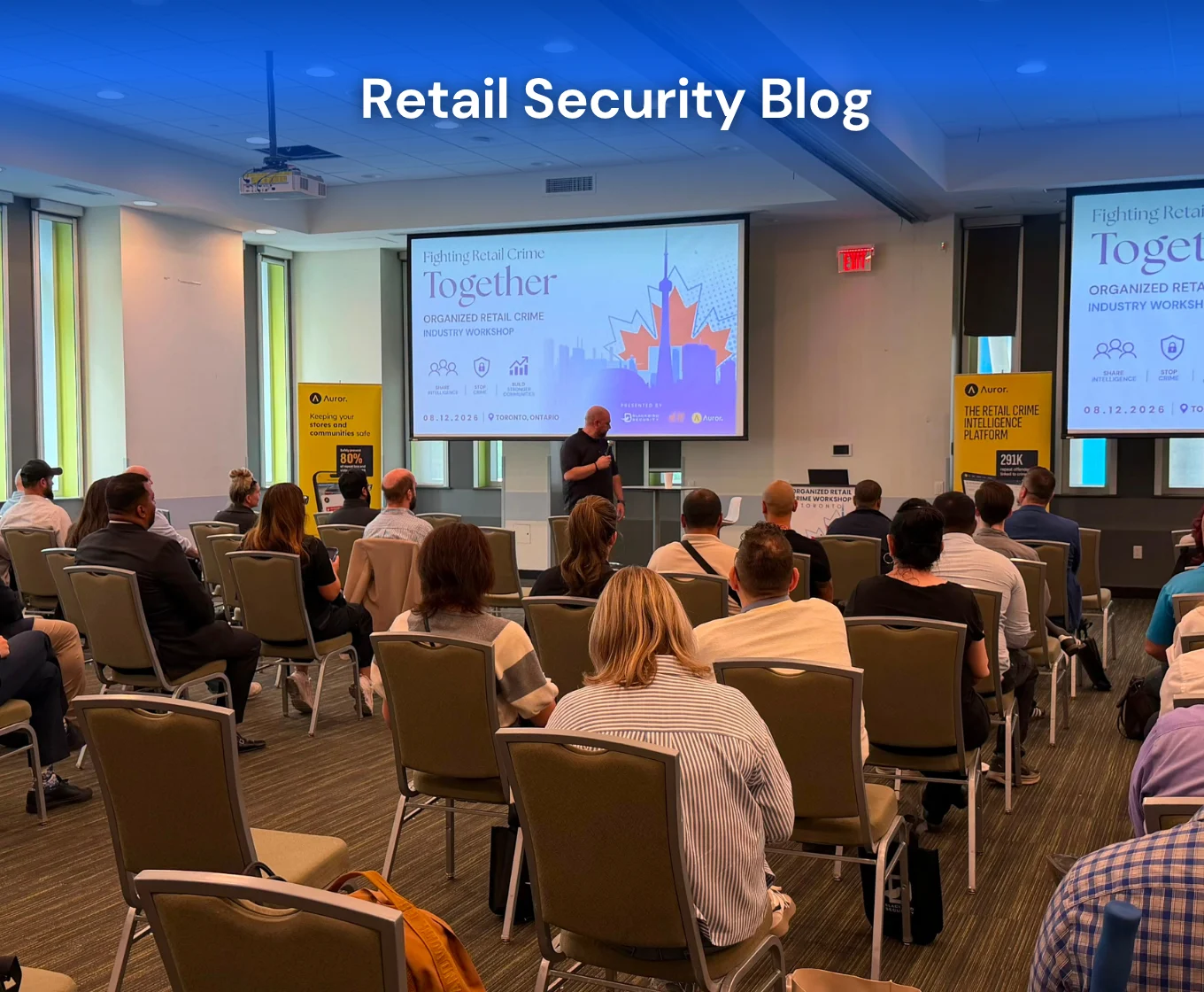
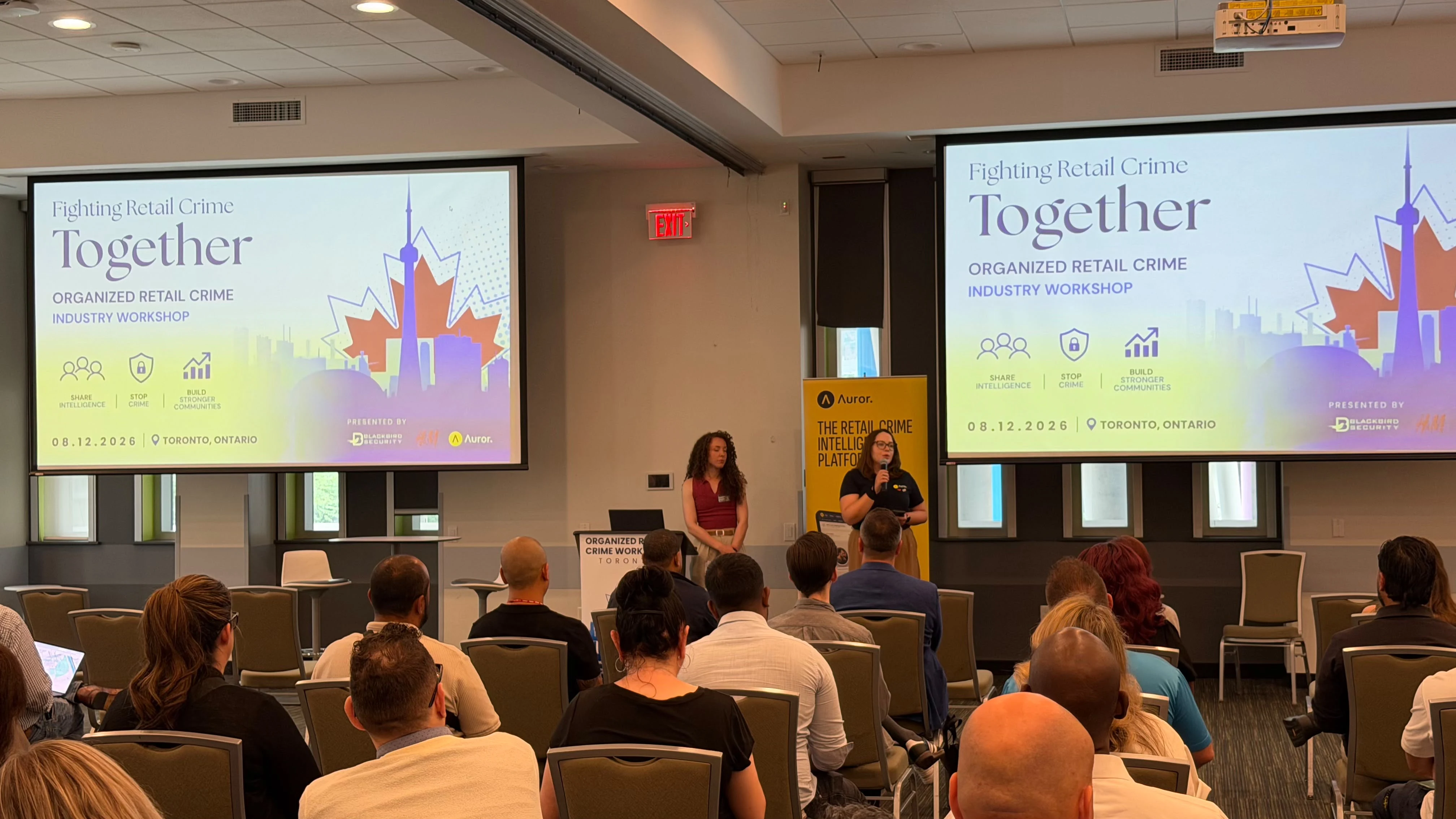
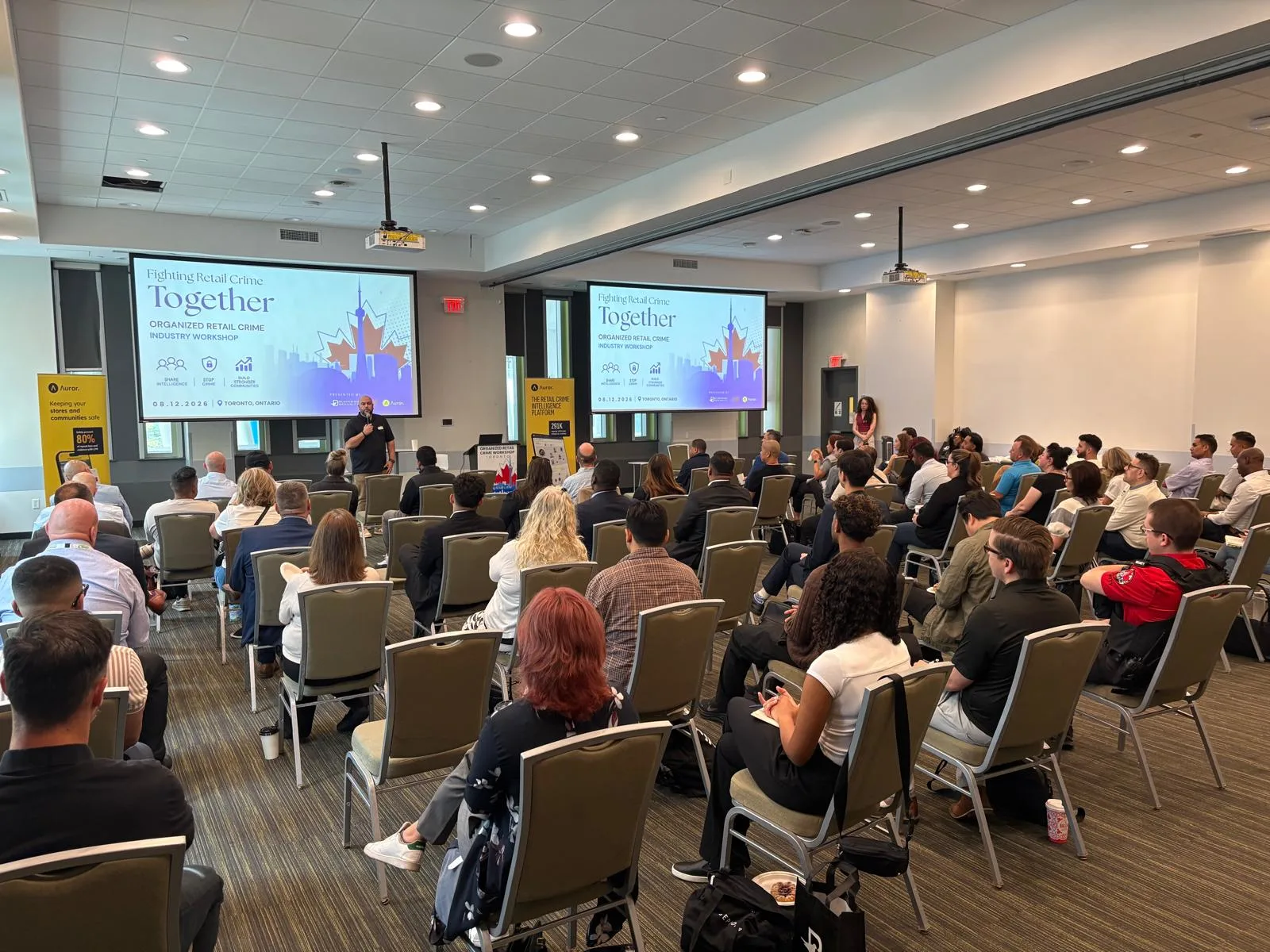
Blackbird Security is proud to have hosted Fighting Retail Crime Together, an organized retail crime industry workshop in Toronto, in partnership with H&M and Auror on August 12th. We shared the floor with asset protection and loss prevention experts from local and international brands, including Nike, Simons, Aritzia, LCBO, and Best Buy, as well as speakers from York Regional Police, the Legislative Assembly of Ontario, and the Solicitor General’s office.
The response to the event was overwhelming. Interest was so high that we had to find a larger venue to accommodate the crowd. We believe the extraordinary response shows that the industry is ready to take ORC seriously, and we couldn’t be more thrilled.
Here were the main takeaways from the workshop.
The Scale of Organized Retail Crime in Canada
Retail crime in Canada has reached unprecedented levels. Retail shrink has grown to $9 billion nationally, nearly double the $5 billion recorded in 2018. More than three-quarters of retailers report increased violence during theft incidents. Beyond any store’s bottom line, ORC negatively affects employees, customers, and entire communities.
What Makes Organized Retail Crime Different
One of the workshop's most important points of discussion was the distinction between opportunistic shoplifting and ORC. While opportunistic shoplifting is a problem, shoplifters typically work alone and steal relatively small amounts of product for personal use.
ORC, by contrast, is sophisticated, coordinated, and resale-driven, targeting high-value goods and involving multiple individuals in different roles who work together. These include:
- Boosters, who steal the merchandise from store floors.
- Drivers, who transport the merchandise between locations.
- Resellers, who sell stolen product through informal markets and online channels.
- Organizers, who direct the entire operation.
Because each person in the network plays one role, networks can be incredibly difficult to pin down. ORC operations sometimes also fund broader criminal networks, including drug trafficking, human trafficking, or money laundering.
From Isolated Incidents to Organized Networks
Rather than targeting the same store repeatedly, ORC activity often happens across locations and jurisdictions. This can make it hard to identify ORC and distinguish it from general shoplifting.
While a single store may experience one incident, the full picture emerges when incidents are compared and connected. Working with loss prevention teams from other retailers allows security professionals to find patterns in incidents, identities, methods, volume, proceeds, and network roles.
As one presenter said, “When incidents are treated separately, the system sees nuisance crime. When they are connected, the system sees organized crime.”
Building ORC Cases
When moving from categorizing thefts as isolated incidents to organized activity, the workshop emphasized the importance of evidence quality and consistent incident reporting. Identifying patterns between incidents is only possible through thorough reporting over time. This means:
- Standardizing how incidents are captured.
- Linking repeat events across stores, dates, and jurisdictions.
- Preparing video evidence, witness details, and loss data for police and prosecutors.
When ORC evidence follows these standards, investigations move faster, and charges are more likely to stick.
Legislative Changes to Help Fight ORC
Bill C-14 introduced targeted changes to Canada’s Criminal Code on bail and sentencing, including a new aggravating factor specifically for retail theft. These changes show that the government recognizes ORC as the serious public safety issue it is.
Collaboration Is the Core of the Solution
Retailers, police, and government bodies can’t solve organized retail crime solo. Everyone, at every level, must collaborate. That’s the core message of Fighting Retail Crime Together, and it’s why bringing retail security professionals together in the same room is so crucial.
As the workshop emphasized, relationships are an operational asset. Retailers, investigators, and police need to proactively build trust between one another, instead of waiting for an ORC incident to bring them together.
The stronger our networks are, the faster information moves and the more effective the response becomes.
What Comes Next
To fight ORC, we must collectively move from individual incident responses to a coordinated, intelligence-led approach. That means using technology to collect evidence and reduce risk, treating ORC as a public safety issue rather than each retailer’s individual problem, maintaining consistent enforcement and prosecution across the system, and collaborating together.
As one of the workshop’s presenters said, “Organized retail crime is a network problem. Our response has to be a network response.”
We sincerely thank everyone who presented and attended our August 12th workshop. We couldn’t be more proud of Toronto’s retail industry for working together to share knowledge. We hope to see you at our next event on October 28th!
Join Us On October 28th
Want to join a network of retail security professionals in Toronto? If you’re a loss prevention or asset protection professional and want to be part of the next Fighting Retail Crime Together workshop on October 28th, get in touch with us to learn more.

FAQs About Organized Retail Crime
What is organized retail crime?
Organized retail crime, or ORC, refers to coordinated theft carried out by criminal networks rather than individuals acting alone. ORC is driven by financial gain and operates across multiple store locations and jurisdictions, making it harder to detect and disrupt than opportunistic shoplifting.
How is organized retail crime different from shoplifting?
Shoplifting typically involves an individual stealing for personal use. Organized retail crime involves structured, coordinated groups stealing merchandise at scale with the intent to resell it. The financial and safety impact of ORC is far greater than typical shoplifting, and it requires a different investigative response.
How much does organized retail crime cost retailers in Canada?
Retail shrink in Canada has reached $9 billion annually. A significant portion of that loss is driven by organized retail crime rather than individual theft. Beyond financial losses, more than three-quarters of Canadian retailers report increased violence during theft incidents, meaning ORC is also a serious employee and customer safety issue.
What is Bill C-14?
Bill C-14 is federal legislation that introduced targeted changes to Canada’s Criminal Code related to bail and sentencing. It includes a new aggravating factor for retail theft, allowing courts to sentence retail crime more seriously. The legislation reflects growing recognition that retail crime is a public safety issue instead of just a business one.
What should retailers do if they suspect organized retail crime is occurring at their store?
The most important steps are to document incidents consistently, preserve evidence, and contact police early. Employees should observe and report rather than intervene, as intervention is dangerous and accurate documentation is more valuable to an investigation. Retailers should also look for connections between incidents across different dates and locations, since ORC networks often target multiple stores. Building relationships with police and other retailers before an incident occurs makes it much easier to respond to ORC activity.

More Articles

Frequently Asked Questions
Key KPIs to track include:
- Incident response times: Faster responses to alarms or emergencies.
- Reduction in theft/vandalism: Compare loss data before and after implementation.
- Patrol compliance: Track patrol frequency and adherence via GPS or logs.
- False alarm rates: Lower rates ensure focus on real threats.
- Client/Employee satisfaction: Gather feedback to measure confidence in security.
- Client services: Dedicated account representative who supports ongoing needs & can adjust strategy as needed
- Allowing access to our 24/7 Control centre for all clients, which is based out of our head office in Vancouver, BC. Clients can call this centre and have a mobile guard swiftly deployed to their business for any spontaneous incidents that occur. We believe in operating it inhouse to ensure all services are streamlined and optimized for the best communication. Our control canter can be reached at this number for current clients: 1-888-991-2622.
- We have a dedicated client services team which directly communicates with clients on a day-to-day basis. Our client services often perform site check ups and can assist with any issues that arise at your business.
Your peace of mind is our priority. We’re more than a service provider—we’re a partner in protecting your business. With our team working tirelessly to anticipate and resolve challenges, you can focus on running your business with confidence, knowing we’re always here to support you. Together, we build safer environments and stronger partnerships, every step of the way.
Secure Your Operation Today