Blackbird Security Hosts Organized Retail Crime Workshop: A Collective Solution to an Industry-Wide Problem
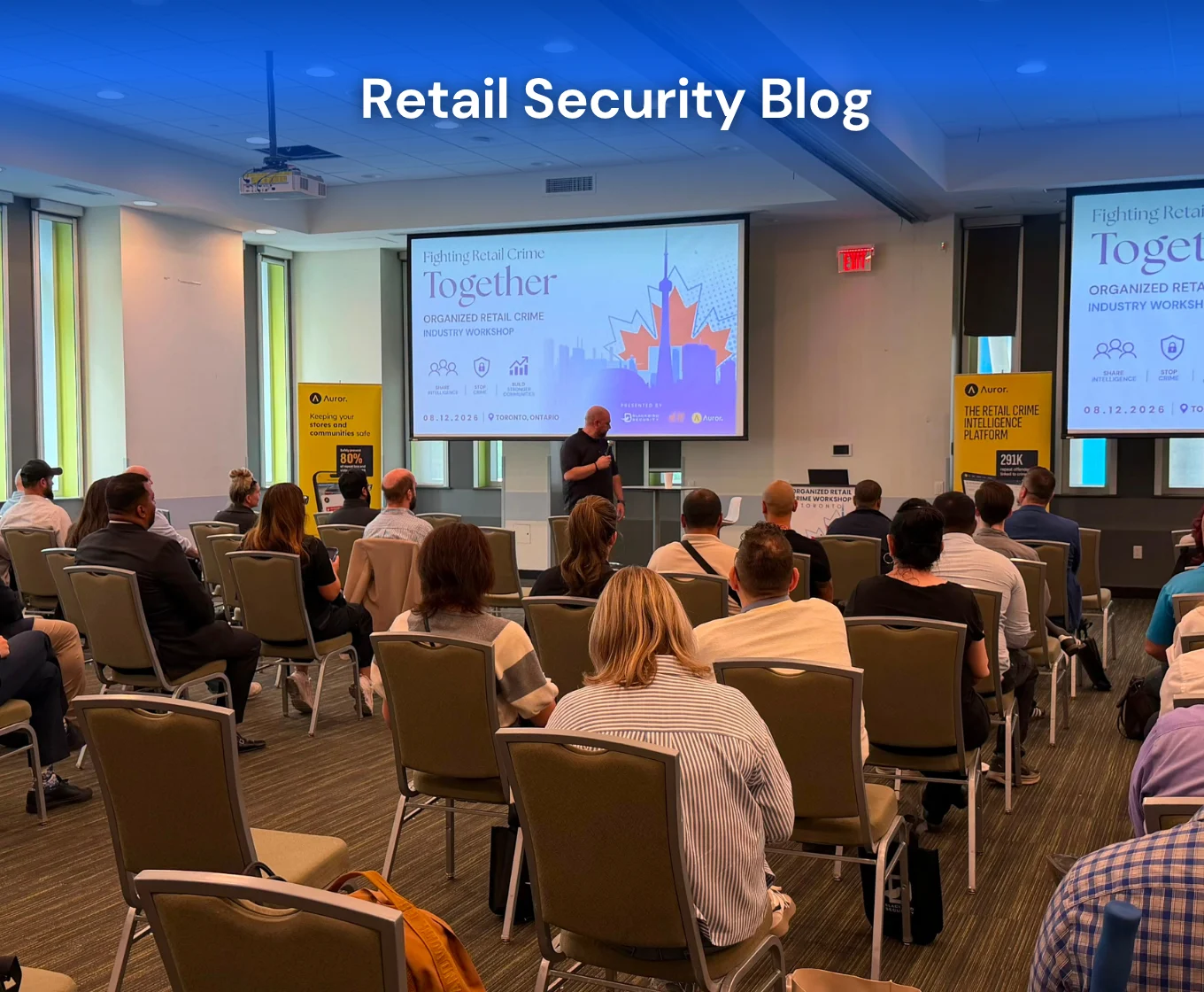
Organized retail crime impacts thousands of retailers across Canada, and the problem is growing. The solution? A network of retail security professionals from Canada’s top retail businesses coming together to share insights and learnings to combat ORC.
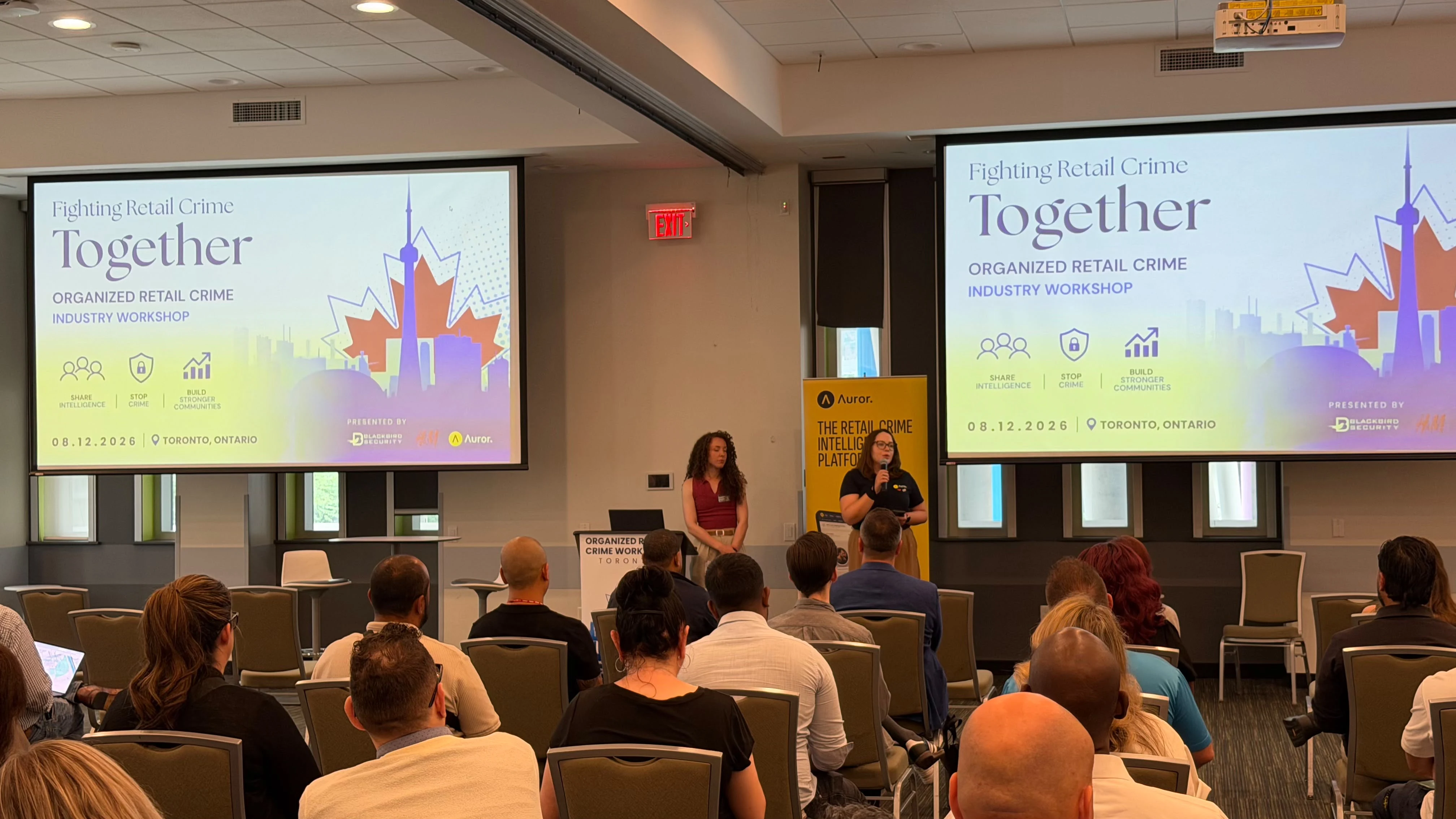
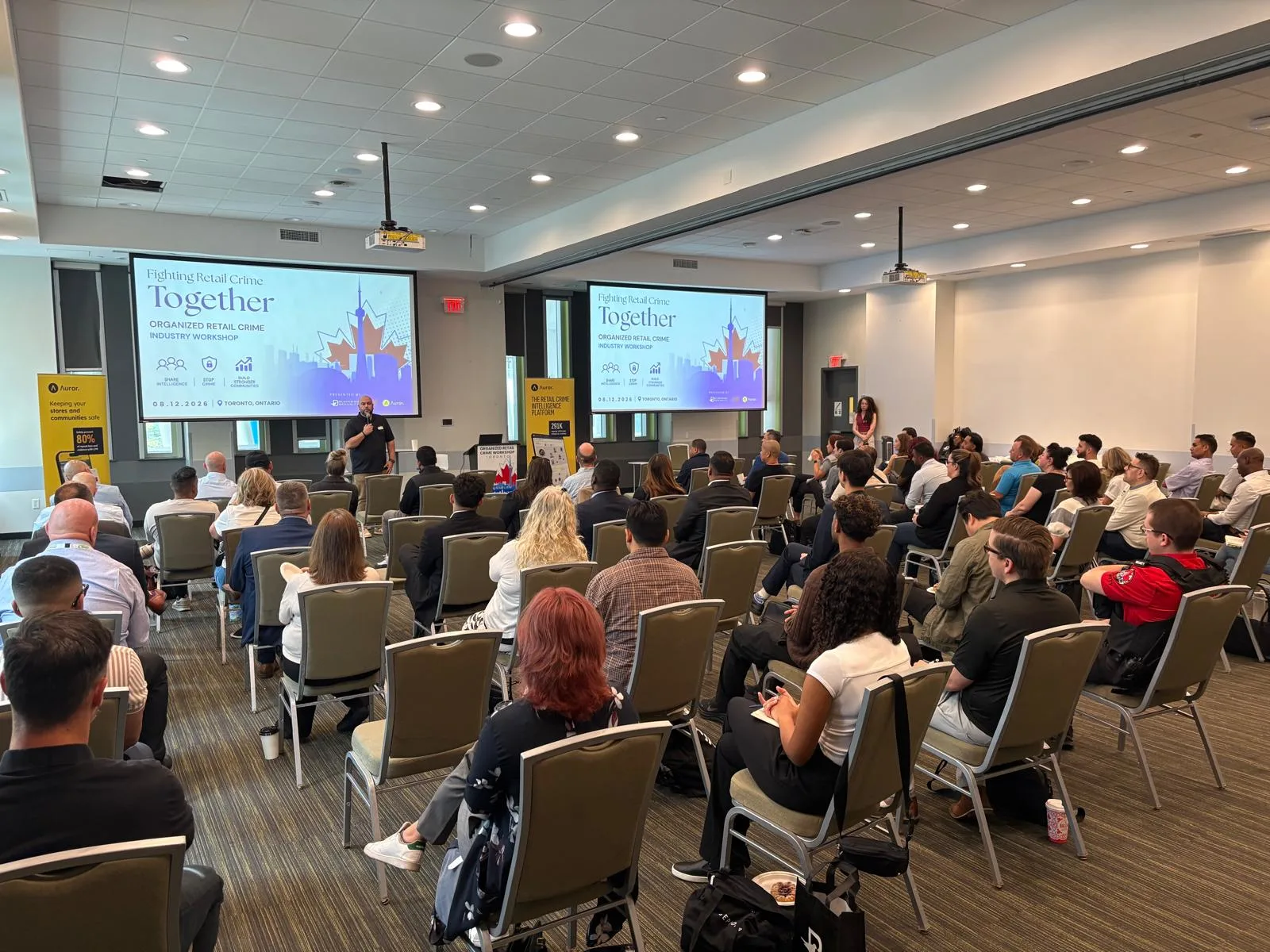
Blackbird Security is proud to have hosted Fighting Retail Crime Together, an organized retail crime industry workshop in Toronto, in partnership with H&M and Auror on August 12th. We shared the floor with asset protection and loss prevention experts from local and international brands, including Nike, Simons, Aritzia, LCBO, and Best Buy, as well as speakers from York Regional Police, the Legislative Assembly of Ontario, and the Solicitor General’s office.
The response to the event was overwhelming. Interest was so high that we had to find a larger venue to accommodate the crowd. We believe the extraordinary response shows that the industry is ready to take ORC seriously, and we couldn’t be more thrilled.
Here were the main takeaways from the workshop.
The Scale of Organized Retail Crime in Canada
Retail crime in Canada has reached unprecedented levels. Retail shrink has grown to $9 billion nationally, nearly double the $5 billion recorded in 2018. More than three-quarters of retailers report increased violence during theft incidents. Beyond any store’s bottom line, ORC negatively affects employees, customers, and entire communities.
What Makes Organized Retail Crime Different
One of the workshop's most important points of discussion was the distinction between opportunistic shoplifting and ORC. While opportunistic shoplifting is a problem, shoplifters typically work alone and steal relatively small amounts of product for personal use.
ORC, by contrast, is sophisticated, coordinated, and resale-driven, targeting high-value goods and involving multiple individuals in different roles who work together. These include:
- Boosters, who steal the merchandise from store floors.
- Drivers, who transport the merchandise between locations.
- Resellers, who sell stolen product through informal markets and online channels.
- Organizers, who direct the entire operation.
Because each person in the network plays one role, networks can be incredibly difficult to pin down. ORC operations sometimes also fund broader criminal networks, including drug trafficking, human trafficking, or money laundering.
From Isolated Incidents to Organized Networks
Rather than targeting the same store repeatedly, ORC activity often happens across locations and jurisdictions. This can make it hard to identify ORC and distinguish it from general shoplifting.
While a single store may experience one incident, the full picture emerges when incidents are compared and connected. Working with loss prevention teams from other retailers allows security professionals to find patterns in incidents, identities, methods, volume, proceeds, and network roles.
As one presenter said, “When incidents are treated separately, the system sees nuisance crime. When they are connected, the system sees organized crime.”
Building ORC Cases
When moving from categorizing thefts as isolated incidents to organized activity, the workshop emphasized the importance of evidence quality and consistent incident reporting. Identifying patterns between incidents is only possible through thorough reporting over time. This means:
- Standardizing how incidents are captured.
- Linking repeat events across stores, dates, and jurisdictions.
- Preparing video evidence, witness details, and loss data for police and prosecutors.
When ORC evidence follows these standards, investigations move faster, and charges are more likely to stick.
Legislative Changes to Help Fight ORC
Bill C-14 introduced targeted changes to Canada’s Criminal Code on bail and sentencing, including a new aggravating factor specifically for retail theft. These changes show that the government recognizes ORC as the serious public safety issue it is.
Collaboration Is the Core of the Solution
Retailers, police, and government bodies can’t solve organized retail crime solo. Everyone, at every level, must collaborate. That’s the core message of Fighting Retail Crime Together, and it’s why bringing retail security professionals together in the same room is so crucial.
As the workshop emphasized, relationships are an operational asset. Retailers, investigators, and police need to proactively build trust between one another, instead of waiting for an ORC incident to bring them together.
The stronger our networks are, the faster information moves and the more effective the response becomes.
What Comes Next
To fight ORC, we must collectively move from individual incident responses to a coordinated, intelligence-led approach. That means using technology to collect evidence and reduce risk, treating ORC as a public safety issue rather than each retailer’s individual problem, maintaining consistent enforcement and prosecution across the system, and collaborating together.
As one of the workshop’s presenters said, “Organized retail crime is a network problem. Our response has to be a network response.”
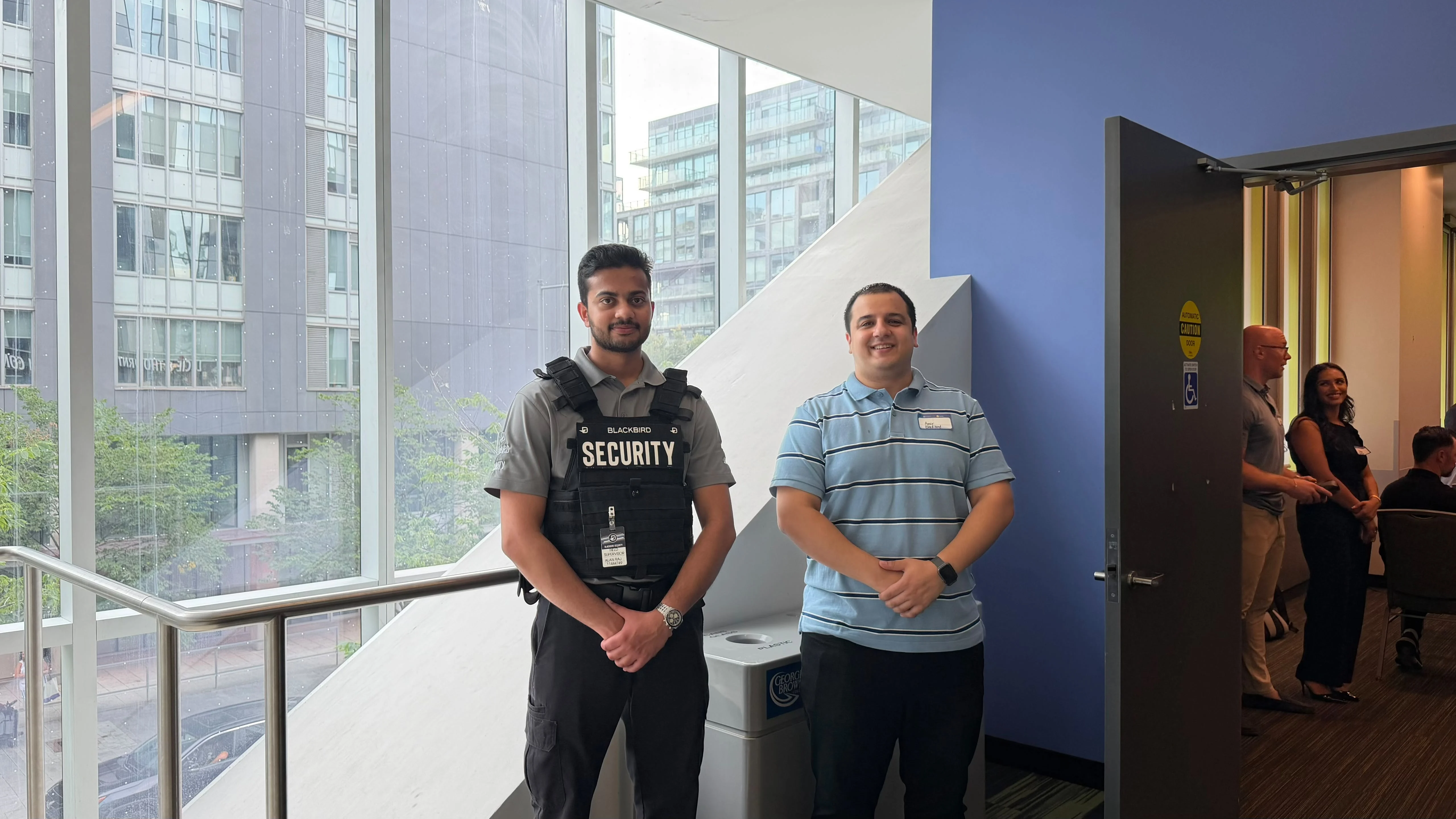
We sincerely thank everyone who presented and attended our August 12th workshop. We couldn’t be more proud of Toronto’s retail industry for working together to share knowledge. We hope to see you at our next event on October 28th!
Join Us On October 28th
Want to join a network of retail security professionals in Toronto? If you’re a loss prevention or asset protection professional and want to be part of the next Fighting Retail Crime Together workshop on October 28th, get in touch with us to learn more.

FAQs About Organized Retail Crime
What is organized retail crime?
Organized retail crime, or ORC, refers to coordinated theft carried out by criminal networks rather than individuals acting alone. ORC is driven by financial gain and operates across multiple store locations and jurisdictions, making it harder to detect and disrupt than opportunistic shoplifting.
How is organized retail crime different from shoplifting?
Shoplifting typically involves an individual stealing for personal use. Organized retail crime involves structured, coordinated groups stealing merchandise at scale with the intent to resell it. The financial and safety impact of ORC is far greater than typical shoplifting, and it requires a different investigative response.
How much does organized retail crime cost retailers in Canada?
Retail shrink in Canada has reached $9 billion annually. A significant portion of that loss is driven by organized retail crime rather than individual theft. Beyond financial losses, more than three-quarters of Canadian retailers report increased violence during theft incidents, meaning ORC is also a serious employee and customer safety issue.
What is Bill C-14?
Bill C-14 is federal legislation that introduced targeted changes to Canada’s Criminal Code related to bail and sentencing. It includes a new aggravating factor for retail theft, allowing courts to sentence retail crime more seriously. The legislation reflects growing recognition that retail crime is a public safety issue instead of just a business one.
What should retailers do if they suspect organized retail crime is occurring at their store?
The most important steps are to document incidents consistently, preserve evidence, and contact police early. Employees should observe and report rather than intervene, as intervention is dangerous and accurate documentation is more valuable to an investigation. Retailers should also look for connections between incidents across different dates and locations, since ORC networks often target multiple stores. Building relationships with police and other retailers before an incident occurs makes it much easier to respond to ORC activity.

Plus d'articles


Foire aux questions
Les principaux KPI à suivre comprennent :
- Délais de réponse aux incidents : réponse plus rapide aux alarmes ou aux urgences.
- Réduction du vol et du vandalisme : comparer les données sur les pertes avant et après la mise en œuvre.
- Conformité des patrouilles : Suivez la fréquence et le respect des patrouilles au moyen du GPS ou des registres.
- Taux de fausses alarmes : Des taux plus bas permettent de mettre l'accent sur les menaces réelles.
- Satisfaction des clients/employés : Recueillir des commentaires pour mesurer la confiance à l'égard de la sécurité.
- Services à la clientèle : représentant de compte dédié qui répond aux besoins continus et peut ajuster la stratégie au besoin
- Permettre l'accès à notre centre de contrôle 24 heures sur 24, 7 jours sur 7 pour tous les clients, qui est basé à notre siège social à Vancouver, en Colombie-Britannique. Les clients peuvent appeler ce centre et faire en sorte qu'un gardien mobile soit rapidement déployé dans leur entreprise pour tout incident spontané qui se produit. Nous croyons qu'il faut l'exploiter en interne pour nous assurer que tous les services sont rationalisés et optimisés pour la meilleure communication. Pour les clients actuels, nous pouvons joindre notre centre de contrôle au numéro suivant : 1-888-991-2622.
- Nous avons une équipe dédiée au service à la clientèle qui communique directement avec les clients au quotidien. Nos services à la clientèle effectuent souvent des vérifications de site et peuvent vous aider à résoudre tout problème qui survient dans votre entreprise.
Votre tranquillité d'esprit est notre priorité. Nous sommes plus qu'un fournisseur de services — nous sommes un partenaire pour protéger votre entreprise. Grâce à notre équipe qui travaille sans relâche pour anticiper et résoudre les défis, vous pouvez vous concentrer sur la gestion de votre entreprise en toute confiance, sachant que nous sommes toujours là pour vous soutenir. Ensemble, nous bâtissons des environnements plus sécuritaires et des partenariats plus solides à chaque étape du processus.
Sécurisez vos opérations dès aujourd'hui