When Commercial Buildings Get Stuck with Copy and Paste Security
Many commercial buildings don’t start out with bad security. They start with average security.
There’s a guard at the front of the building. Guards patrol a given area. Cameras are up. On paper, everything checks out. But all buildings aren’t identical. When the same security plan gets applied everywhere, gaps start to develop. And that’s why a generic, copy and paste approach doesn’t work well in building security.
This blog breaks down what copy and paste security looks like, why it isn’t effective for protecting your building, and how tailored adjustments can provide coverage aligned with your site’s risks and day-to-day operation.
Same Security Plan, Different Buildings
No two buildings operate exactly the same way.
Imagine a security provider assigns the same standard security plan to two different properties: a 15-floor office tower and a large open retail plaza. The instructions are identical, one daytime guard, scheduled patrols every two hours, general monitoring for suspicious activity, and writing a report at the end of the shift. The plan may seem organized and consistent, but in reality, a single approach rarely works for every building.
In an office tower, most tenants and staff work regular business hours, daytime activity is predictable, but potential issues are more likely to develop after hours when businesses are closed. At a retail plaza, traffic is more constant throughout the day, with customers coming and leaving, and people gathering across different spots on the property. Incidents can happen quickly, and they don't wait for a scheduled patrol.
Every building has its own layout, traffic flow, and daily activity patterns. When security plans don’t take these differences into consideration, they provide coverage without truly addressing the risks. The most dependable security plans are tailored to the way each building operates, not copied from a standard template.
How Blackbird Security Makes Tailored Security Plans
With insights from real-world building security practices, Blackbird Security prioritizes working with you to determine a tailored plan for your specific site. Here are the adjustments we can make to align each security plan with the site’s actual needs and risks:
Office Building Security Plan Adjustments
- Schedule after-hours patrols
Add more after-hour patrols to your security plan. Guards maintain active monitoring overnight and during off-hours to deter unwanted activity, inspect key areas, and identify potential security concerns before they escalate.
A responsible security provider should adjust patrol timing and frequency based on your building’s activity patterns and risk levels, rather than following a fixed schedule.
- Improve monitoring at all access points
The security guards at your office building should check both major and minor access points, including entrances, exits, side doors, and restricted areas to make sure they’re properly secured day and night. This includes verifying locks, testing handles, and watching for doors that appear closed but haven’t fully latched, so no one can slip through a door, access restricted areas, or take anything from the building.
During each shift, guards also scan digital tokens to verify specific building spots are checked, ensuring consistent coverage and no areas are overlooked.
- Add emergency response procedures
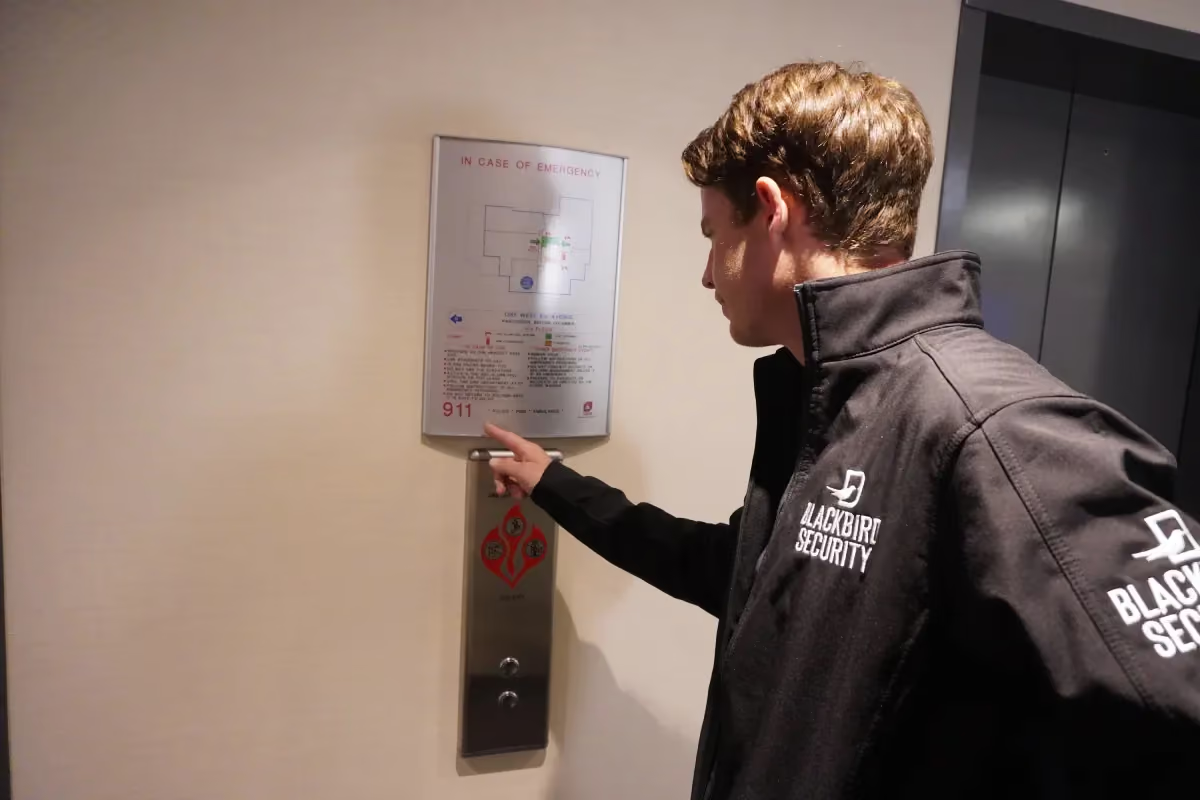
Add emergency/alarm response procedures to the plan so incidents like fire or medical emergencies can be addressed quickly. In an emergency, building guards secure the area, guide occupants to designated safe locations, and coordinate with emergency services.
Guards also keep building management informed about the emergency situations and the actions taken, ensuring clear communication and proper follow-up after the incident.
- Provide concierge security coverage
Including concierge security services as part of your security plan. Concierge guards are stationed at the front desk. They welcome people as they walk in, help with questions and directions, and keep track of who’s coming and leaving.
By enhancing overall coverage, improving oversight of access points and emergency readiness, the plan shifts from generic coverage to targeted protection, ensuring security is aligned with the building’s real risks and daily activity.
Retail Plaza Security Plan Adjustments
- Randomize parking lot patrols
Many retail plazas have an expansive parking lot which also needs to be monitored. We can adjust patrol timing, frequency, and routes so individuals can’t predict guard movements and try to break into vehicles during unmonitored windows. If the parking lot is a higher-risk area and more incidents occur at certain times, considering adding extra patrols during those hours.
- Increase monitoring of gathering areas with proactive intervention
Deploy guards to spend more time in high-traffic gathering areas such as benches, storefront walkways, and other gathering spots. Guards should also maintain a visible presence and proactively address situations like loitering or public drinking, reminding individuals of plaza rules and asking them to stop or leave the property.
This adjustment helps prevent issues from escalating and helps keep the plaza well managed.
- Add routine property maintenance checks
Include maintenance checks as part of regular patrols so guards can spot issues like overflow garbage, damaged fixtures, or lighting problems. Guards document and report these issues promptly to property management so concerns can be addressed before they turn into complaints or safety problems, helping prevent accidents and liability issues.
When patrols vary, hotspot areas receive more attention, and property conditions are monitored regularly, security adapts to real activity and doesn’t follow patterns people can predict across the plaza.
Ready for a Security Plan That Actually Fits?
If your building is still relying on a generic, copy-paste security plan, it’s time to switch to one designed specifically for your property. Security is not a passive activity and is something that actively needs to be monitored and managed. At Blackbird Security, our building security services are fully customizable to suit your site’s needs. We start by understanding the challenges your property faces, then develop a security plan tailored to how your space operates.
Contact us today and let’s find out the security solution that actually fits your site!
FAQs
How often should a security plan be reviewed or updated?
There’s no fixed timeline for updating a security plan. It should be reviewed and updated whenever your property’s risks, operations, or activity patterns change. This includes changes in hours, increased incidents, layout changes, seasonal activity shifts, or new security concerns.
Is a customized program more effective than adding more guards?
A customized security program directs resources where they’re most effective by adjusting patrol schedule, coverage areas, and guard duties based on risks and activity patterns. In some situations, that may mean adding more guards, but only where additional coverage is genuinely needed.
How much does commercial building security cost?
The cost of commercial building security varies based on risk level, property size, and whether special services are needed, such as alarm response. For a detailed quote, fill out the form here and let’s discuss the security options for your building.

Plus d'articles
Foire aux questions
Les principaux KPI à suivre comprennent :
- Délais de réponse aux incidents : réponse plus rapide aux alarmes ou aux urgences.
- Réduction du vol et du vandalisme : comparer les données sur les pertes avant et après la mise en œuvre.
- Conformité des patrouilles : Suivez la fréquence et le respect des patrouilles au moyen du GPS ou des registres.
- Taux de fausses alarmes : Des taux plus bas permettent de mettre l'accent sur les menaces réelles.
- Satisfaction des clients/employés : Recueillir des commentaires pour mesurer la confiance à l'égard de la sécurité.
- Services à la clientèle : représentant de compte dédié qui répond aux besoins continus et peut ajuster la stratégie au besoin
- Permettre l'accès à notre centre de contrôle 24 heures sur 24, 7 jours sur 7 pour tous les clients, qui est basé à notre siège social à Vancouver, en Colombie-Britannique. Les clients peuvent appeler ce centre et faire en sorte qu'un gardien mobile soit rapidement déployé dans leur entreprise pour tout incident spontané qui se produit. Nous croyons qu'il faut l'exploiter en interne pour nous assurer que tous les services sont rationalisés et optimisés pour la meilleure communication. Pour les clients actuels, nous pouvons joindre notre centre de contrôle au numéro suivant : 1-888-991-2622.
- Nous avons une équipe dédiée au service à la clientèle qui communique directement avec les clients au quotidien. Nos services à la clientèle effectuent souvent des vérifications de site et peuvent vous aider à résoudre tout problème qui survient dans votre entreprise.
Votre tranquillité d'esprit est notre priorité. Nous sommes plus qu'un fournisseur de services — nous sommes un partenaire pour protéger votre entreprise. Grâce à notre équipe qui travaille sans relâche pour anticiper et résoudre les défis, vous pouvez vous concentrer sur la gestion de votre entreprise en toute confiance, sachant que nous sommes toujours là pour vous soutenir. Ensemble, nous bâtissons des environnements plus sécuritaires et des partenariats plus solides à chaque étape du processus.
Sécurisez vos opérations dès aujourd'hui