When Security Guards Are Present But Not Delivering Results
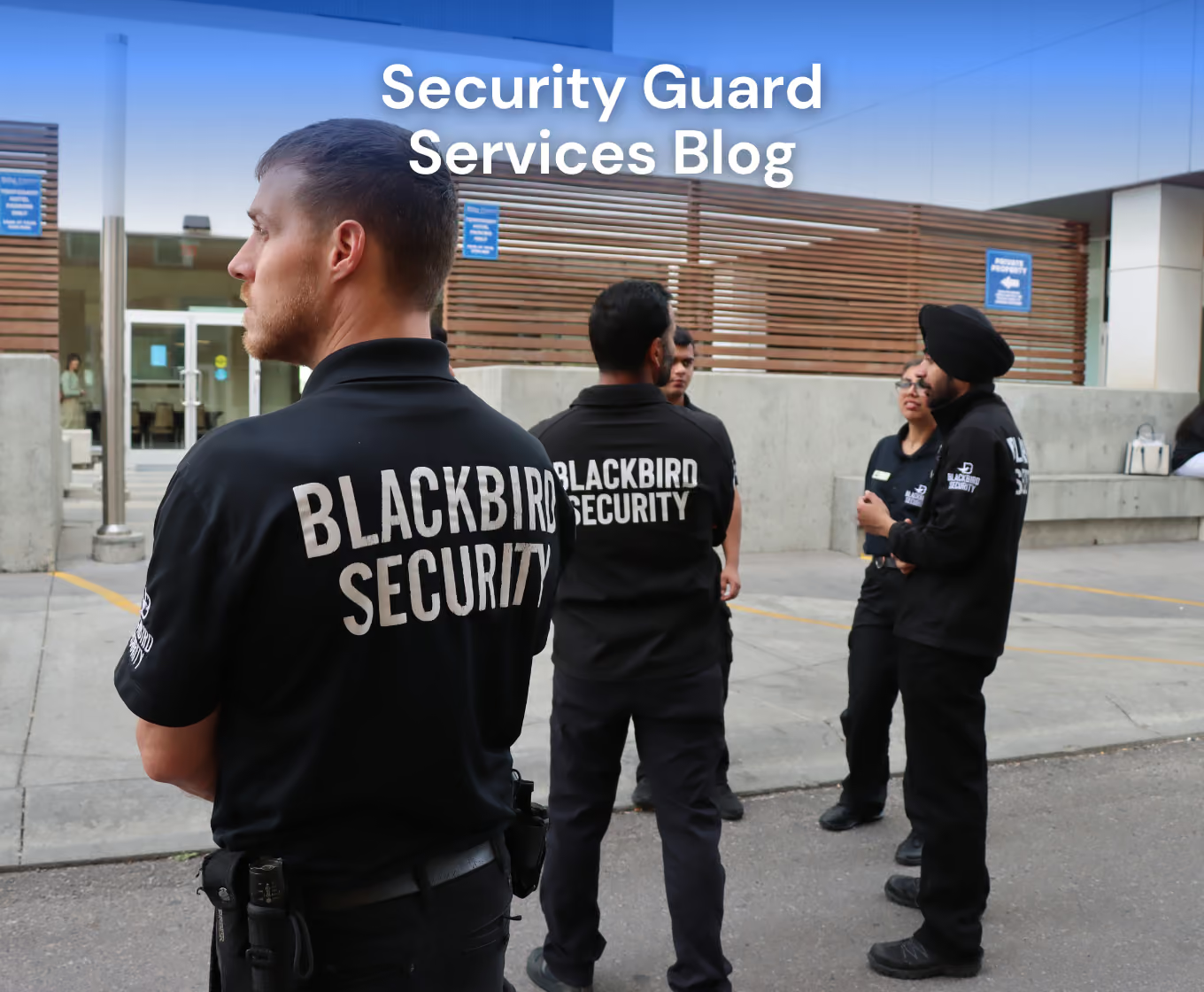
Is your security guard company really delivering? There’s nothing more frustrating than seeing guards present at your property, receiving reports, and, perhaps most importantly, paying for the service, but not seeing results.
We hear this from new clients all the time. Guards from their previous security company were present and appeared to be doing the work, but incidents continued to occur, and results were underwhelming. So, what was going wrong?
In these situations, the issue is rarely the presence of guards themselves. More often, it comes down to whether the security strategy is built around processes proven to mitigate risk. If you’re unsatisfied with your current security provider, this blog is for you. We’ll illustrate how strong security results depend on strategy, communication, and the ability to adapt coverage to a property's true operating conditions.
1. Security Coverage That Looks Active But Isn’t Strategic
A visible security guard presence is an important component of deterrence, but just being seen isn’t enough to secure a property. That’s where strategy comes in. Without it, guards may stick to the same patrol routes or spend equal time in areas that don’t need as much attention, leaving problem spots unchecked over time.
Experienced security companies take a more focused approach. They plan patrol times, routes, and priorities based on incident data, tenant activity, and the building’s layout. This way, coverage helps actively prevent risks instead of just going through the motions.
Strategic oversight often includes:
- Adjusting patrol frequency in higher-risk areas.
- Increasing visibility during peak activity periods.
- Monitoring secondary entrances and shared spaces more closely.
- Reviewing site conditions that may contribute to security concerns.
When coverage aligns with real activity patterns, security becomes more effective and predictable for occupants.

2. Reporting That Documents Problems But Doesn’t Lead to Change
Incident reporting is a key part of a professional security team’s job. However, not all reports are equally useful. Some companies treat reporting as paperwork rather than a tool to guide decisions.
If reports aren’t detailed or consistent, important patterns can be missed. Property managers might receive event summaries, but without strategic insight and analysis, they won’t understand why incidents happen or how to stop them.
Instead, incident reporting should be treated as part of a larger risk prevention process. This should involve:
- Detailed documentation of incidents and observations.
- Tracking trends over time.
- Sharing insights with property management teams.
- Adjusting security procedures based on findings.
Structured, transparent, and thorough reporting supports informed planning and long-term improvements across the property.
3. Providing Guards Without Providing Strategy
When it comes to on-site security, coverage is the defining feature. But the job doesn’t begin and end with providing guards at a given property. Without a solid plan and continual, data-based adjustments, a property’s needs can outpace the security provided.
Security companies that focus on results take a more proactive role. They regularly check how well the strategy is working and suggest changes based on site activity and incident trends. This creates a security plan that grows with the property.
Indicators of a strategic security partnership may include:
- Routine performance reviews.
- Adjustments to patrol schedules or staffing levels.
- Defined escalation and response procedures.
- Ongoing, consistent communication with property management.
This level of oversight helps ensure that security resources are used where they make the greatest impact.
4. Reactive Responses Instead of Preventive Oversight
Security teams are often judged by how they handle incidents. While responding decisively is important, preventing problems in the first place is even better.
Guards from top security companies are trained to observe early warning signs and address issues before they escalate. This might involve monitoring for unsecured access points, reporting maintenance concerns that affect safety, or addressing disruptive behaviour in shared spaces before it escalates into conflict.
Preventative oversight supports risk prevention by:
- Reducing opportunities for unauthorized access
- Maintaining orderly shared environments
- Supporting building maintenance teams through early reporting
- Providing reassurance to tenants and visitors
A proactive mindset helps create stability throughout the property and minimizes disruptions to daily operations.
5. Familiar Routines Instead of Aligning With How the Building Operates
Every property functions differently. Factors like delivery frequency, tenant schedules, visitor traffic, and amenities all affect the security strategy. If a strategy stays the same for too long, it eventually stops matching the property’s needs.
The most experienced security companies build their strategy based on how a building is used and refine it over time. They review incident data, talk with property managers, and change procedures as activity changes.
Custom security planning often includes:
- Revising patrol timing to match peak movement periods.
- Clarifying front desk responsibilities for concierge security teams.
- Increasing oversight of parkades, amenities, or secondary access points.
- Reassessing staffing levels as occupancy or usage changes.
- Adapting or creating protocols based on common patterns.
When coverage reflects a building’s actual operations, both property managers and tenants benefit from a more consistent and reliable security environment.
Partner With a Results-Focused Security Guard Company
Security works best when trained staff, clear processes, and ongoing communication come together. Custom programs based on proven methods help prevent risks before they happen and better fit daily building activities.
If your current security feels like it’s not making a difference, it might be time to check if your program really fits your property. Partnering with a company that focuses on clear results can help you feel confident in your building’s security plan.
Get in touch with us today to learn how we can keep your property secure.
Frequently Asked Questions
Why might a property still experience incidents even with security guards on site?
Incidents can continue when security coverage is not aligned with the building’s activity patterns or when preventive measures are limited. A strategic approach to patrol planning and incident reporting helps improve outcomes.
How does incident reporting support risk prevention?
Detailed incident reporting allows property managers and security teams to identify trends, adjust procedures, and address recurring concerns before they escalate into larger issues.
What is a customized security program?
A customized security program is designed around a property’s layout, tenant activity, and historical incident patterns. It involves ongoing adjustments to staffing, patrol schedules, and responsibilities.
How often should a security program be reviewed?
Security programs should be reviewed periodically, especially when building occupancy, activity levels, or incident patterns change. Regular reviews help maintain effective coverage.
What should property managers look for in a security guard company?
Property managers should look for providers that emphasize communication, proactive risk prevention, structured incident reporting, and the ability to tailor services to the site’s needs.

Plus d'articles

Foire aux questions
Les principaux KPI à suivre comprennent :
- Délais de réponse aux incidents : réponse plus rapide aux alarmes ou aux urgences.
- Réduction du vol et du vandalisme : comparer les données sur les pertes avant et après la mise en œuvre.
- Conformité des patrouilles : Suivez la fréquence et le respect des patrouilles au moyen du GPS ou des registres.
- Taux de fausses alarmes : Des taux plus bas permettent de mettre l'accent sur les menaces réelles.
- Satisfaction des clients/employés : Recueillir des commentaires pour mesurer la confiance à l'égard de la sécurité.
- Services à la clientèle : représentant de compte dédié qui répond aux besoins continus et peut ajuster la stratégie au besoin
- Permettre l'accès à notre centre de contrôle 24 heures sur 24, 7 jours sur 7 pour tous les clients, qui est basé à notre siège social à Vancouver, en Colombie-Britannique. Les clients peuvent appeler ce centre et faire en sorte qu'un gardien mobile soit rapidement déployé dans leur entreprise pour tout incident spontané qui se produit. Nous croyons qu'il faut l'exploiter en interne pour nous assurer que tous les services sont rationalisés et optimisés pour la meilleure communication. Pour les clients actuels, nous pouvons joindre notre centre de contrôle au numéro suivant : 1-888-991-2622.
- Nous avons une équipe dédiée au service à la clientèle qui communique directement avec les clients au quotidien. Nos services à la clientèle effectuent souvent des vérifications de site et peuvent vous aider à résoudre tout problème qui survient dans votre entreprise.
Votre tranquillité d'esprit est notre priorité. Nous sommes plus qu'un fournisseur de services — nous sommes un partenaire pour protéger votre entreprise. Grâce à notre équipe qui travaille sans relâche pour anticiper et résoudre les défis, vous pouvez vous concentrer sur la gestion de votre entreprise en toute confiance, sachant que nous sommes toujours là pour vous soutenir. Ensemble, nous bâtissons des environnements plus sécuritaires et des partenariats plus solides à chaque étape du processus.
Sécurisez vos opérations dès aujourd'hui