Is Your Warehouse Security Strategy Keeping Up With Your Operation?
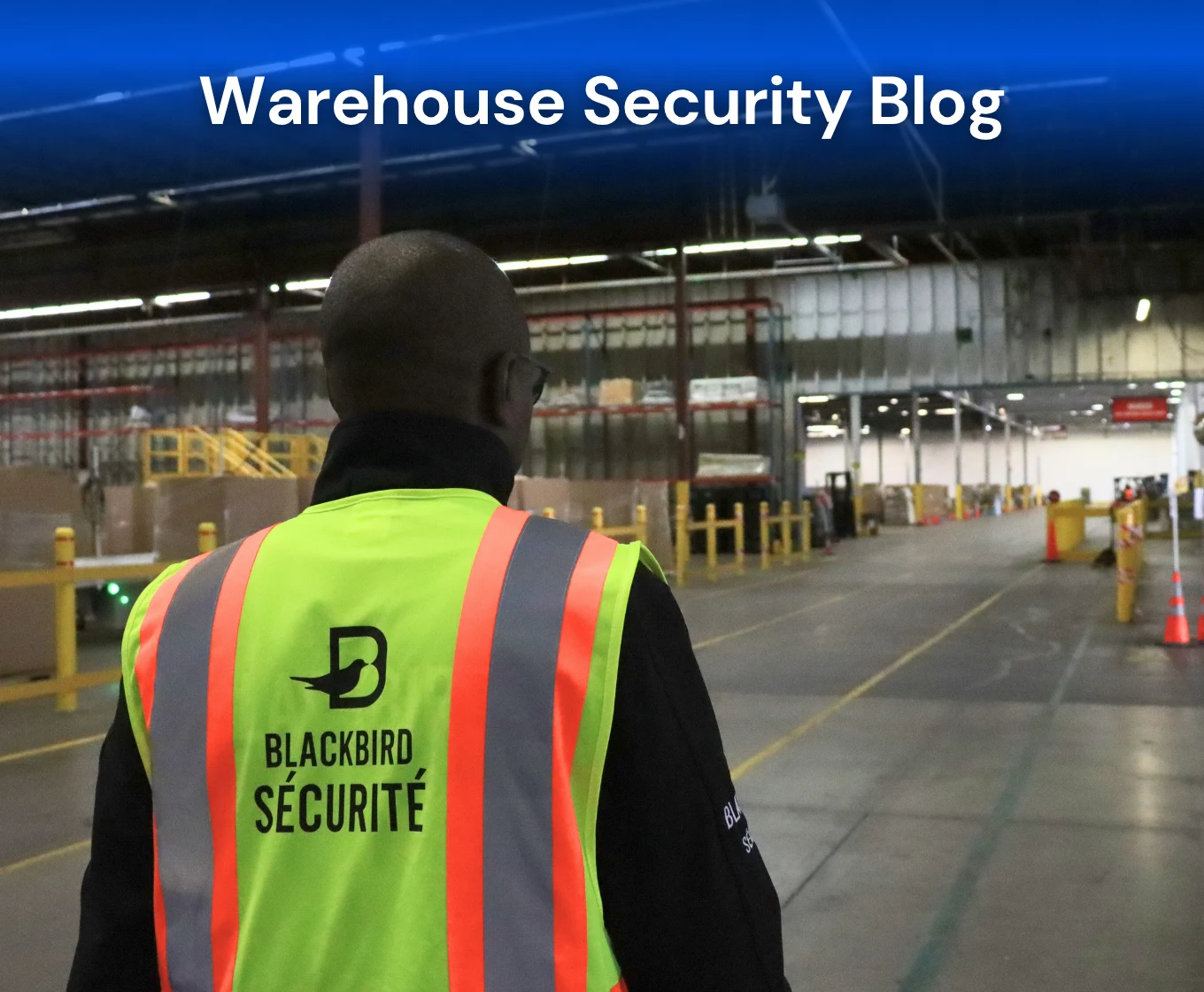
When was the last time you audited your warehouse security strategy? As warehouse and distribution centre managers know, warehouses store vast amounts of inventory, often valued at millions of dollars. Their large footprints, extensive staff teams, visitor frequency, multiple access points, and often isolated locations can make them attractive targets and difficult to secure effectively. The challenge grows as warehouses scale, with security sometimes falling through the cracks in favour of more immediate logistical concerns.
This blog outlines the most common warehouse security gaps expanding warehouses face and what a complete, up-to-date strategy looks like, so you can identify where your warehouse needs more coverage.
Key Takeaways
- Warehouses face security risks that most other commercial properties don't.
- Common gaps in warehouse security include after-hours coverage, poor access control, limited security camera coverage of key areas, and the lack of a loss prevention strategy.
- A complete warehouse security strategy combines physical guards, technology, and internal processes.
- Blackbird Security provides tailored security guard services for warehouses across Canada.
1. After-Hours Coverage
The hours between the last shift ending and the first shift beginning are when warehouses are most vulnerable to outside threats. If your facility has recently expanded, you may not realize you now need after-hours coverage, especially if external theft hasn’t been a problem in the past.
If your warehouse lacks an on-site after-hours security presence, uses a basic alarm or security camera system without live monitoring, or relies on physical keys (rather than digital access credentials), it’s likely time to re-evaluate.
Here’s what effective after-hours warehouse security coverage looks like:
- Regular mobile patrol security checks with reports after each patrol.
- Varied patrol timing and routes that prevent patterns from being noticed and exploited.
- 24/7 alarm monitoring connected to a UL-listed central station, with monitoring personnel who will contact police when an alarm is triggered.
- AI-assisted security cameras with digital tripwires that send an alert when motion is detected.
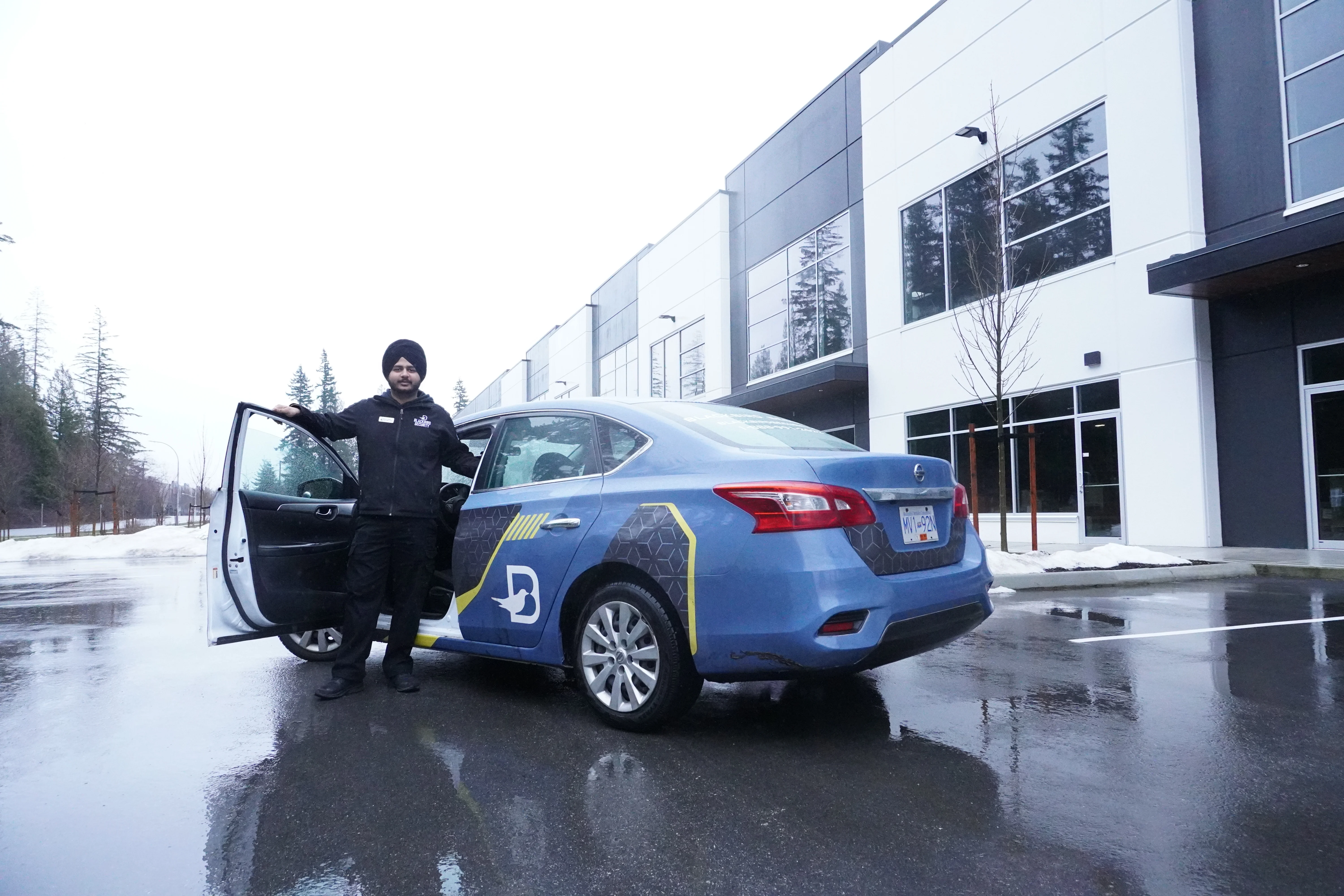
While some facilities may require an overnight on-site warehouse security guard, many don’t. The solution is mobile patrol security, which involves a guard travelling to your site in a marked security vehicle, conducting a patrol, creating a report, and leaving once the patrol is concluded.
Since mobile guards aren’t present at your site for the duration of their shift, mobile patrol is more cost-effective than a static security guard presence. Patrol timing can be randomized, preventing bad actors from learning your facility’s vulnerable times, and guards are equipped with GPS tracking.
2. Access Control
Managing who has access to every area of your warehouse is harder than it may seem, especially when teams expand or shrink seasonally. Some of the most common access control problems in warehouses include:
- Physical keys that can be copied, lost, or otherwise not returned when staff leave.
- No audit trail showing who entered specific areas and when.
- Contractors and delivery personnel gaining access without oversight.
- Little control over who can access general areas versus restricted areas.
Modern access control provides digital credentials that can be granted securely and revoked instantly, access audit trails, automated lock scheduling, and remote unlocking. This makes them a significant security upgrade over physical keys, and a worthwhile consideration if your facility is expanding.
For warehouses looking to upgrade their access control infrastructure, Blackbird Security’s sister company, Blackbird Tech, installs cloud-based access control systems that integrate with security camera and alarm monitoring.
3. Security Camera Blind Spots
If your warehouse has recently changed its layout, your security camera positioning should change, too. Some of the most common security camera gaps we see in warehouses include:
- Cameras pointed at entrances, but not covering loading docks, stockrooms, or hallways.
- High-value inventory areas lacking robust coverage.
- Outdated cameras with low resolution.
- No live security camera monitoring, meaning footage is likely reviewed only after theft is caught another way.
- Blind spots created by moved shelving, equipment, or the size of the space.
An updated warehouse security camera system should include 4K cameras covering all key areas from multiple angles and a monitoring platform that can detect and respond to suspicious activity in real time.

4. No Strategy Review Process
Your warehouse operations are always evolving, and security strategies that aren’t regularly reviewed tend to fall out of step with the facility they’re supposed to protect. The following events should signal that it’s time for a review:
- Changes in inventory value, product type, or volume.
- Physical expansion or added access points.
- Changes in shift patterns or staffing levels.
- A recent incident that exposed a gap in security coverage.
A warehouse security strategy review should include a site walk-through with your security provider, a review of incident reports for patterns, an assessment of whether current coverage aligns with current risk levels, and adjustments to guard coverage and patrol routes based on the findings.
At Blackbird Security, we conduct regular strategy reviews with our warehouse clients to keep coverage optimized. We take a proactive approach, rather than using outdated strategies until an incident occurs.
5. Internal Theft and Shrinkage
Internal theft is a warehouse security risk that doesn’t get talked about enough. It’s uncomfortable to consider that employees may be stealing from the business, but the unfortunate reality is that it happens. In businesses like warehouses and distribution centres, where staff have direct access to inventory and know the facility’s routines and vulnerabilities, internal theft often goes undetected.
This is exactly what happened last year at Amazon’s Ajax fulfillment centre, where police arrested five people alleged to have stolen around $2 million in merchandise over two years. Police seized over $250,000 in electronics, $50,000 in cash, and $130,000 in merchandise from a storage locker, suggesting the stolen goods were being resold. Two of the five arrested were warehouse employees, while the other three were external associates.
While this story involved millions of dollars' worth of stolen merchandise, even small thefts can add up to significant shrinkage costs over time without active loss prevention measures.
With the right warehouse security strategy in place, you can mitigate internal theft. This can look like:
- Well-trained warehouse security guards who understand the unique dynamics of warehouse properties.
- Live monitored security camera coverage of receiving areas, loading bays, warehouse floors, and access points.
- Regular inventory audits with discrepancies flagged and investigated quickly.
- Internal inventory-handling processes that reduce opportunities for theft.
- Policies that encourage reporting suspected employee theft internally.
At Blackbird Security, our warehouse security guards are trained to identify behaviour associated with internal theft. When one of our guards sees something suspicious, they report it and follow up with leadership to address the incident.
Employee theft is a risk that only grows when warehouse operations and team sizes scale beyond management’s capacity to keep up with security.
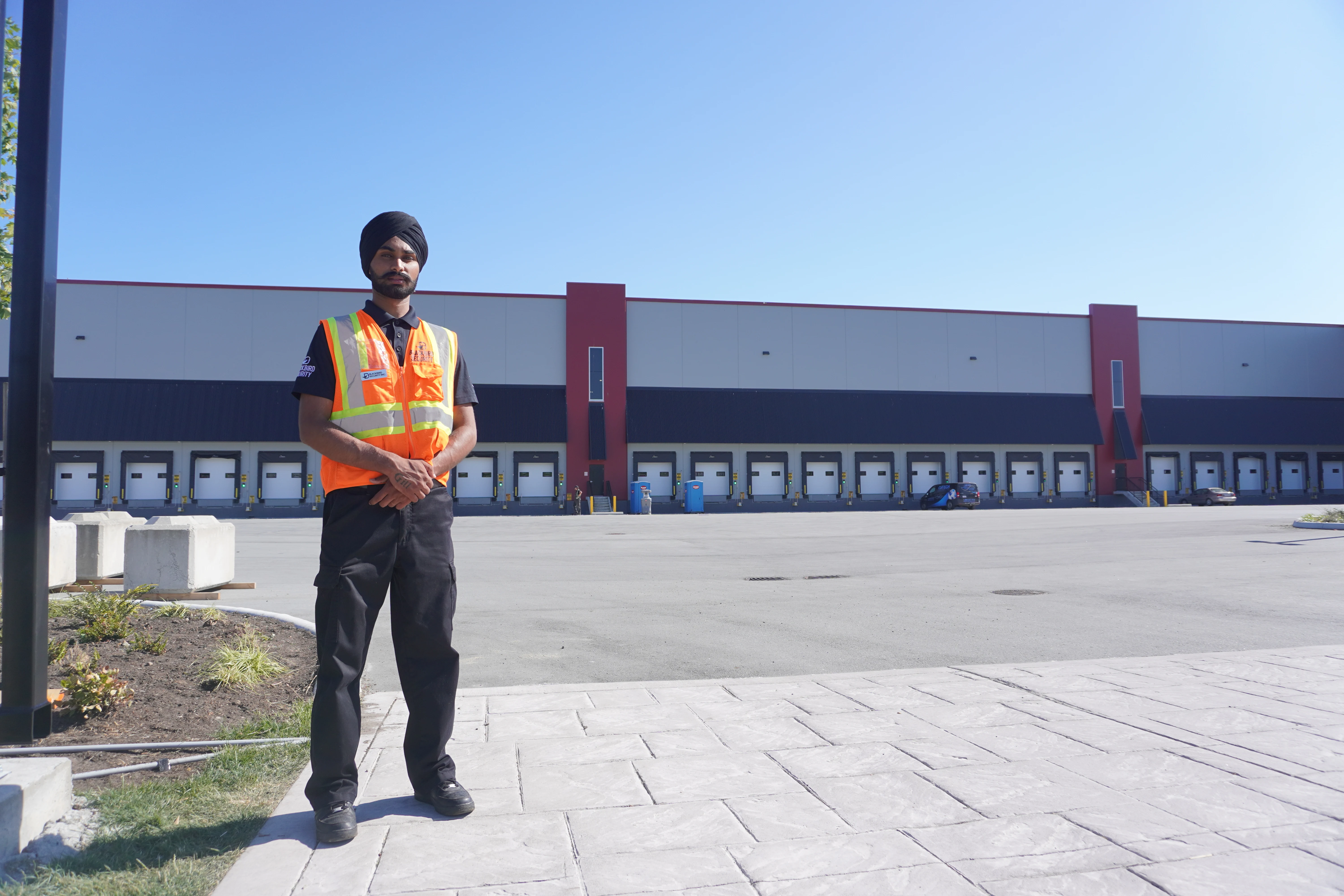
What a Complete Warehouse Security Strategy Looks Like
No single warehouse security solution can protect your facility from every risk. However, you can mitigate risks through comprehensive coverage. The best approach is to combine multiple security measures to fill as many gaps as possible.
A complete warehouse security strategy includes:
- On-site or mobile security guards during and after operational hours.
- Access control that tracks and manages entry across all areas of the property.
- Live monitored security camera coverage of key areas including loading docks, receiving areas, and areas containing high-value inventory.
- A loss prevention approach that addresses both internal and external theft.
- A regular security strategy review process.
Professional warehouse security usually costs less than the results of theft, disruptions, or damage to your reputation. If your warehouse is growing, addressing security gaps before an incident occurs is the best way to stay proactive.
Partner With Blackbird Security for Warehouse Security Across Canada
At Blackbird Security, we help warehouses and distribution centres across Canada create security plans that match their needs and risk levels. Whether you need on-site guards, mobile patrols, employee theft prevention, or a full review of your current security strategy, our team can find and close any gaps in your current coverage.
Contact us today to find out how we can protect your warehouse.
Frequently Asked Questions About Warehouse Security
What are the biggest security risks for warehouses?
Internal theft and shrinkage, after-hours break-ins, access control vulnerabilities, and security camera blind spots are some of the biggest warehouse security threats. Internal theft is particularly harmful, as it often goes undetected for long periods, allowing losses to build before the source is identified. Warehouses that are scaling rapidly are especially vulnerable, as security strategies can fall behind operational growth.
What does warehouse security involve?
Warehouse security typically includes on-site or mobile security guards, security cameras, and access control systems. Warehouse security guards are trained to identify and address internal and external theft. The right security measures for a given facility depend on property size, inventory value, staffing patterns, and hours of operation.
How do security guards help protect warehouses?
Security guards deter external theft, conduct patrols to monitor for suspicious activity, respond to alarms and incidents, and identify internal theft. Guards also enforce access control policies, monitor loading dock activity, and document incidents for management follow-up.
What is the difference between mobile patrol and static security for a warehouse?
A static security guard provides continuous on-site coverage at your warehouse for the duration of their shift. A mobile patrol guard travels between multiple properties in a marked security vehicle, conducting scheduled or randomized patrols at each site. Mobile patrol is more cost-effective than static coverage and works well for facilities that don't require 24/7 security but still need after-hours checks.
Does Blackbird Security provide warehouse security across Canada?
Yes. Blackbird Security provides warehouse security services across Canada, including in Vancouver, Toronto, Calgary, Edmonton, Winnipeg, and other major Canadian cities.

More Articles
Frequently Asked Questions
Key KPIs to track include:
- Incident response times: Faster responses to alarms or emergencies.
- Reduction in theft/vandalism: Compare loss data before and after implementation.
- Patrol compliance: Track patrol frequency and adherence via GPS or logs.
- False alarm rates: Lower rates ensure focus on real threats.
- Client/Employee satisfaction: Gather feedback to measure confidence in security.
- Client services: Dedicated account representative who supports ongoing needs & can adjust strategy as needed
- Allowing access to our 24/7 Control centre for all clients, which is based out of our head office in Vancouver, BC. Clients can call this centre and have a mobile guard swiftly deployed to their business for any spontaneous incidents that occur. We believe in operating it inhouse to ensure all services are streamlined and optimized for the best communication. Our control canter can be reached at this number for current clients: 1-888-991-2622.
- We have a dedicated client services team which directly communicates with clients on a day-to-day basis. Our client services often perform site check ups and can assist with any issues that arise at your business.
Your peace of mind is our priority. We’re more than a service provider—we’re a partner in protecting your business. With our team working tirelessly to anticipate and resolve challenges, you can focus on running your business with confidence, knowing we’re always here to support you. Together, we build safer environments and stronger partnerships, every step of the way.
Secure Your Operation Today