How Do Security Guards Handle Aggressive or Confrontational People?
For security guards, encountering aggressive or confrontational behaviour is a fact of the job in every industry. Whether it’s an upset customer, a disruptive event attendee, a frustrated resident, or someone in distress, security guards regularly face high-tension situations that require them to de-escalate another person's emotions.
Whether or not these situations are resolved safely and quickly often comes down to the security guards' training and composure. Specifically, their ability to use peaceful de-escalation, a set of communication techniques to reduce tension and resolve conflict without physical intervention.
In this blog, we'll cover what peaceful de-escalation is, why it's important in security, and the step-by-step process security guards use to handle aggressive or confrontational people.
Key Takeaways
- Peaceful de-escalation is the primary tactic security guards use to resolve aggressive or confrontational situations without physical intervention.
- Guards must manage their own response while working to calm the other person.
- Physical intervention is always a last resort, used only when de-escalation has failed and safety is at immediate risk.
- At Blackbird Security, we prioritize peaceful de-escalation. Our guards receive de-escalation training through our in-house training program, Blackbird Academy.
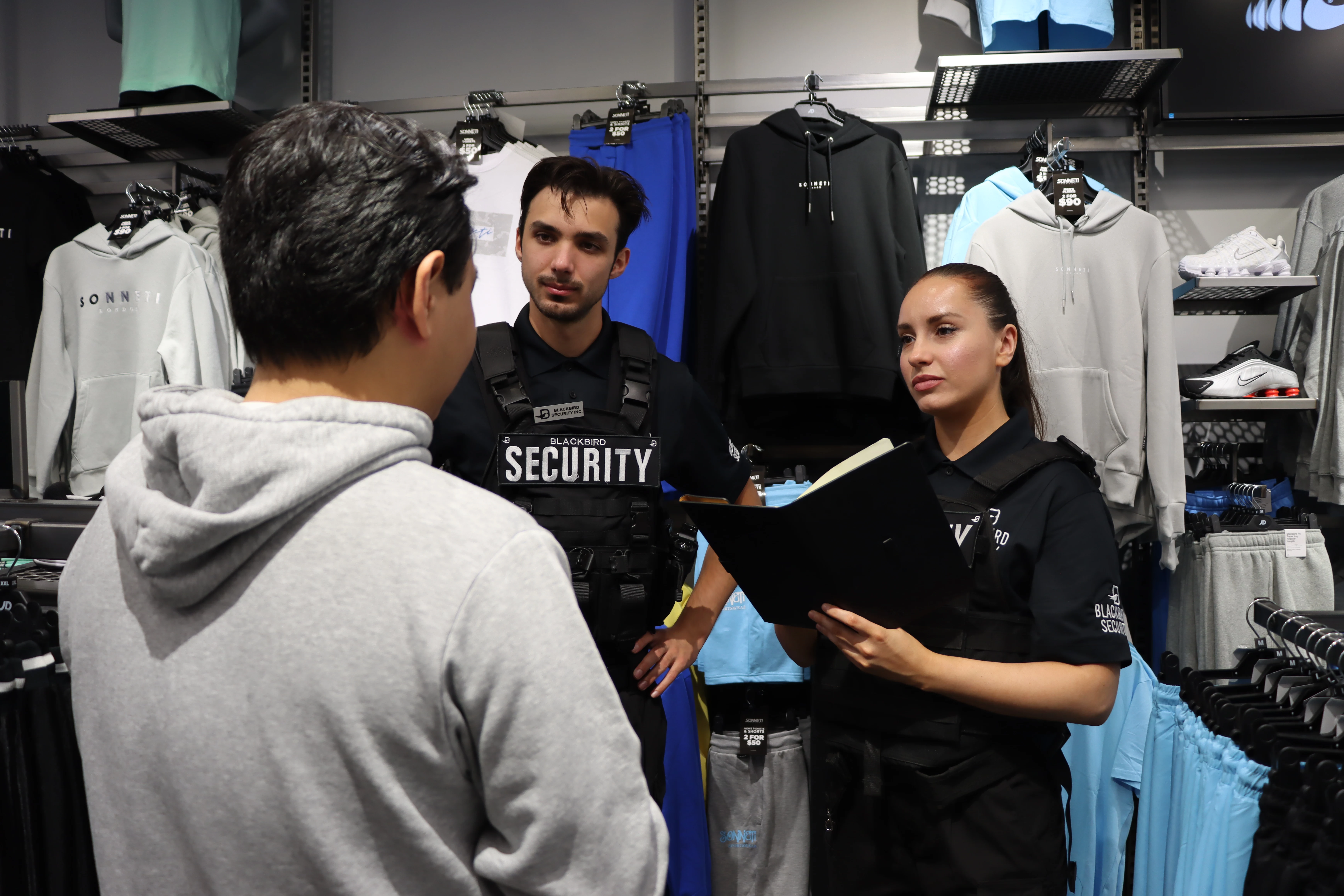
What Is Peaceful De-Escalation?
Peaceful de-escalation is a set of techniques used to minimize tension in a conflict or potentially dangerous situation through verbal communication and body language rather than physical force. The goal is to defuse a tense situation by addressing the person calmly, listening actively, and acknowledging their emotions to understand what’s driving their behaviour, rather than matching their aggression or resorting to physical intervention before it’s absolutely necessary.
Peaceful de-escalation isn’t about avoiding confrontation or passively avoiding difficult conversations. It’s the opposite. Through peaceful de-escalation, guards can safely facilitate confrontations with difficult individuals in a way that minimizes risks, establishes firm boundaries, maintains calm and professional interactions, and keeps everyone safe.
Peaceful De-Escalation Is a Skill
De-escalation isn't a response most people have naturally, especially under pressure. When faced with aggression, the instinct is often to react by raising your voice, standing your ground, or responding with force. In security, that reaction can make situations significantly worse.
That’s why de-escalation is a trained skill. It takes practice to master staying composed in stressful situations. Security guards who haven't received proper training can make things worse without realizing it through their tone, body language, or word choice.
However, with the right training, guards learn to stay calm when facing emotional people and apply the right tactics to defuse tension.
Why Peaceful De-Escalation Is Important in Security
Physical intervention carries legal and safety risks for the guard, the person they're dealing with, and the business or property they're protecting. Peaceful de-escalation allows guards to resolve situations through verbal communication, minimizing those risks.
Guards trained in de-escalation also make properties safer for everyone. When people see conflicts handled in a calm, professional, and non-violent way, it builds trust and a sense of security.
Additionally, not everyone behaves aggressively on purpose. Some seemingly aggressive individuals are experiencing a mental health crisis, and their behaviour may be due to fear, confusion, or distress. Security guards trained in de-escalation recognize the signs of a mental health crisis and can respond with patience, which often results in a safer outcome.
Step-by-Step: How Security Guards De-Escalate Aggressive or Confrontational Situations
Next, here's a step-by-step look at how trained security guards handle aggressive or confrontational situations from start to finish.
Step 1: Assess the Situation
Before approaching, a security guard will read the situation. They might take a mental note of whether:
- The person is alone or with others.
- An argument is taking place.
- The conflict is between guests or involves a staff member.
- Bystanders are at risk.
- There’s any sign of a weapon.
This quick assessment informs how the guard approaches and what kind of response may be needed. Rushing in without reading the situation first can make things worse from the beginning.
Step 2: Maintain a Non-Threatening Presence
A security guard who approaches with a tense posture or a raised voice can put the individual on the defence immediately. Instead, guards approach with a relaxed but alert posture, open hands visible, and calm movement, keeping a safe distance. The guard’s goal is to signal that they're there to resolve the situation and provide help.
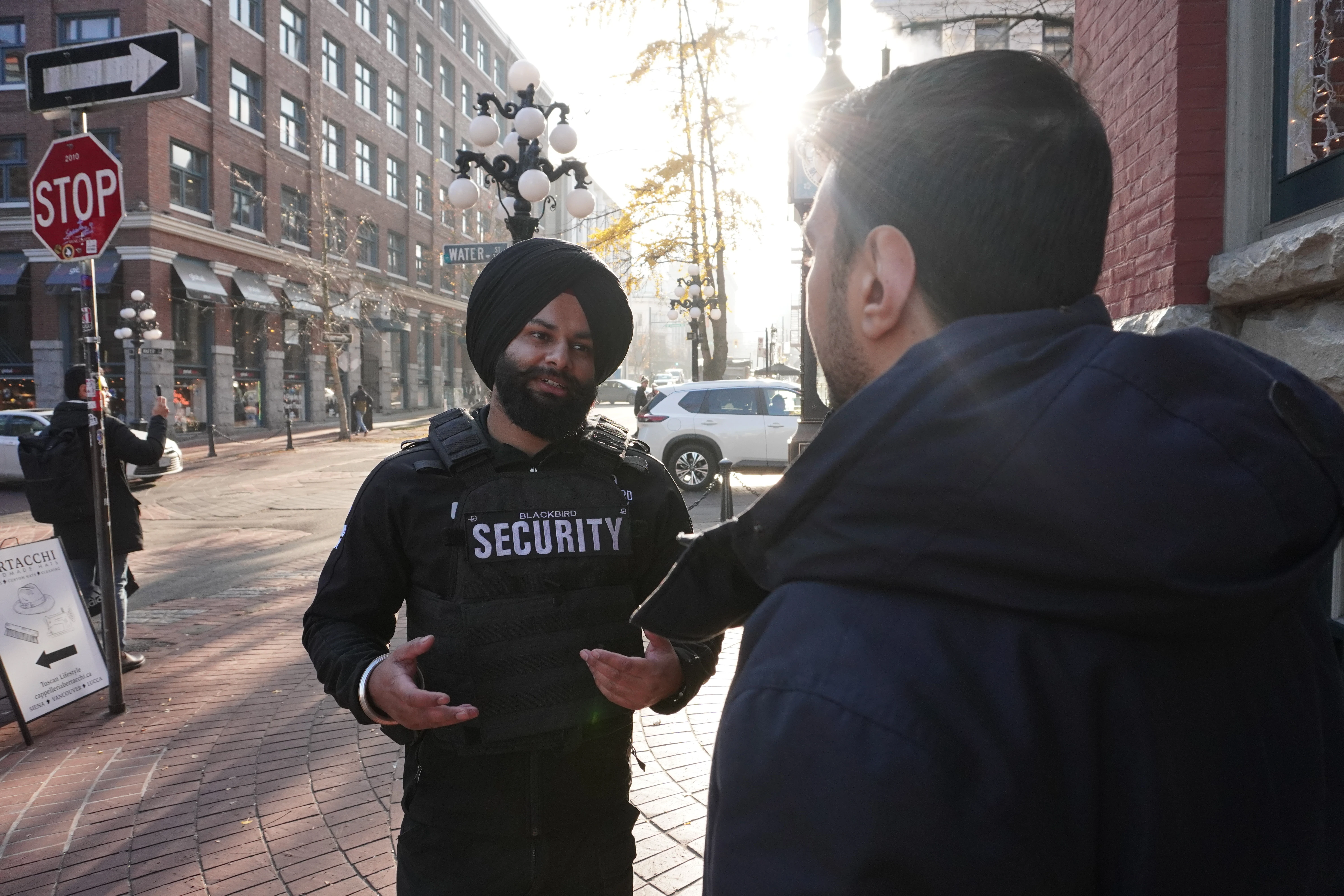
Step 3: Establish Communication
The security guard introduces themselves with a steady tone of voice. Rather than commanding, they ask questions, use active listening techniques, acknowledge what the person is saying, and avoid dismissive statements. Validating an upset person’s emotions is an effective way to help them calm down, making this one of the most important steps.
Step 4: Identify the Issue
Aggressive behaviour usually has a cause, which could be frustration, fear, intoxication, or a mental health crisis. A guard who can identify the cause is better positioned to resolve the situation. Where possible, the guard offers options, such as speaking with a manager or finding another solution, as giving people a reasonable sense of control often reduces tension.
Step 5: Set Boundaries
If the individual cannot calm down and the behaviour continues, the security guard calmly but firmly states the consequences, which can include removal from the premises or calling the police. The guard should deliver this information in a matter-of-fact, non-aggressive way.
Step 6: Know When to Escalate
While de-escalation is always the priority, some situations require an immediate response. If a person becomes physically aggressive, makes threats, or puts others at risk, the guard calls for backup or contacts police. If the guard is trained in use of force, they may restrain or arrest the individual. Physical intervention is a last resort, used only when it’s needed to keep everyone safe.
Step 7: After the Situation Is Resolved
Once the situation is under control, the security guard documents the incident in a report covering what happened, the date and time, any actions taken, and how it was resolved. If the guard had to call the police, they will provide a witness statement and assist with any follow-up investigations.

The Training Behind the Response
De-escalation doesn't come naturally to most people put into high-pressure situations. It takes practice, feedback, and real-world use to build the composure needed in security. That's why Blackbird Security invests in our guards through Blackbird Academy, our industry-leading in-house training program.
In relation to conflict and de-escalation, Blackbird Academy covers:
- Peaceful de-escalation and verbal conflict resolution.
- Crisis intervention training through the Crisis Prevention Institute.
- Mental health first aid training through St. John's Ambulance.
- Trauma-informed practice training through the Justice Institute of BC.
- Customer service and professional communication.
The mental health first aid and crisis intervention components are especially important for de-escalation, as they prepare guards to recognize when aggression may be the result of a mental health crisis rather than malicious intent.
Partner With Canada's Most Trusted Security Company
The way a security guard handles an aggressive or confrontational person reflects directly on the brand they’re protecting, which is why it’s so important for guards to maintain composure and seek peaceful resolutions wherever possible. A well-trained security guard who stays calm and composed has a better chance of resolving potentially serious situations quickly and safely before they escalate. A guard who reacts aggressively can make the same situation significantly worse.
Most security companies require guards to meet only the provincial licensing minimum. At Blackbird Security, we invest in our team’s training. De-escalation skills help keep guards safe, make their role more effective, and allow them to better protect the people and businesses they serve.
Contact us to learn how our team can protect your property and the people on it.
FAQs
What is peaceful de-escalation?
Peaceful de-escalation is a set of techniques used to reduce tension in a conflict or potentially dangerous situation through verbal and non-verbal communication rather than physical force. The goal is to resolve the situation calmly before it escalates further.
How do security guards handle aggressive people?
Trained security guards start by assessing the situation, staying calm, and opening communication with the person. From there, they work to identify what’s causing the behaviour and offer options where possible. Guards only use physical intervention as a last resort if de-escalation fails and safety is at risk.
When do security guards involve police?
Security guards contact police when a situation involves physical aggression, threats with a weapon, or behaviour that puts others at immediate risk. Guards also involve police when they find an illegal item or need to detain someone.
What training do security guards receive for de-escalation?
Provincial licensing requires basic security training, but the depth of de-escalation training varies significantly between companies. The best security companies provide additional training in verbal conflict resolution, crisis intervention, and mental health first aid, which goes well beyond licensing requirements.
Does Blackbird Security train guards in de-escalation?
Yes. Blackbird Security guards receive training in de-escalation, verbal conflict resolution, crisis intervention, and mental health first aid.

More Articles
Frequently Asked Questions
Key KPIs to track include:
- Incident response times: Faster responses to alarms or emergencies.
- Reduction in theft/vandalism: Compare loss data before and after implementation.
- Patrol compliance: Track patrol frequency and adherence via GPS or logs.
- False alarm rates: Lower rates ensure focus on real threats.
- Client/Employee satisfaction: Gather feedback to measure confidence in security.
- Client services: Dedicated account representative who supports ongoing needs & can adjust strategy as needed
- Allowing access to our 24/7 Control centre for all clients, which is based out of our head office in Vancouver, BC. Clients can call this centre and have a mobile guard swiftly deployed to their business for any spontaneous incidents that occur. We believe in operating it inhouse to ensure all services are streamlined and optimized for the best communication. Our control canter can be reached at this number for current clients: 1-888-991-2622.
- We have a dedicated client services team which directly communicates with clients on a day-to-day basis. Our client services often perform site check ups and can assist with any issues that arise at your business.
Your peace of mind is our priority. We’re more than a service provider—we’re a partner in protecting your business. With our team working tirelessly to anticipate and resolve challenges, you can focus on running your business with confidence, knowing we’re always here to support you. Together, we build safer environments and stronger partnerships, every step of the way.
Secure Your Operation Today