How Do Commercial Security Cameras Work?
We see commercial security cameras mounted on walls and ceilings at the businesses and public buildings we visit throughout our day. You might even have some installed at your business or property. But how do security cameras actually work? How are they best used? And what differentiates an older CCTV system from the modern, intelligent surveillance technology businesses are upgrading to in 2026?
This blog covers all of those questions and more to help you make a more informed decision about the right security camera system for your property.
Key Takeaways
- Traditional CCTV systems record footage passively, which is accessed after an incident.
- Modern commercial security cameras are proactive, using AI and real-time monitoring to detect and respond to live threats.
- A professionally installed commercial security camera system is designed around your property’s specific layout and risks, giving you the best coverage possible.
What Is CCTV Footage?
CCTV stands for closed-circuit television and refers to a video surveillance system in which cameras capture footage that is transmitted to a specific set of monitors or recording devices rather than being broadcast publicly. CCTV footage is the recorded video captured by these cameras.
For decades, CCTV was the standard approach to commercial surveillance. Cameras would record continuously to tapes or hard drives, and the footage would be reviewed manually if and when an incident occurred. It was useful for documentation and investigations, but outside of deterring potential threats through well-placed cameras, it wasn’t designed to prevent crime.
Addressing concerns in real time is the primary limitation of traditional CCTV, and it’s what modern commercial security camera systems were created to address.
How Traditional CCTV Systems Work
If you have a CCTV system at your business, chances are that you already know how traditional CCTV systems work. They use cameras to capture video, which is transmitted to a recording device and stored for later review. Here’s a breakdown:
- Cameras are installed at key points around a property and capture continuous video footage.
- That footage is transmitted via cables to a digital video recorder (DVR), where it’s stored.
- If an incident occurs, security staff or management review the recorded footage to find out what happened. This footage may be shared with law enforcement or insurance companies, depending on the nature of the incident.
- Footage captured by traditional systems must be viewed from a local monitor and is typically stored for a set period of time before being overwritten by new recordings.
This approach is reactive by nature (as in, it reacts to incidents). The camera records what happens, but the system isn’t able to flag suspicious activity, send out alerts, or manage the situation in any capacity. By the time the footage is reviewed, the incident is well over.
This poses a problem when incidents, such as break-ins, occur overnight when team members and security personnel have gone home for the day. This is where CCTV systems have gotten a major upgrade in recent years.
How Modern Commercial Security Cameras Work
Modern commercial security camera systems operate differently from traditional CCTV systems. Rather than passively recording footage for later review, today’s systems are designed to actively monitor your property and respond to potential threats in real time, in addition to recording. This gives them a proactive edge that helps stop crime as it unfolds.
Here’s an overview of what goes into a security camera system in 2026:
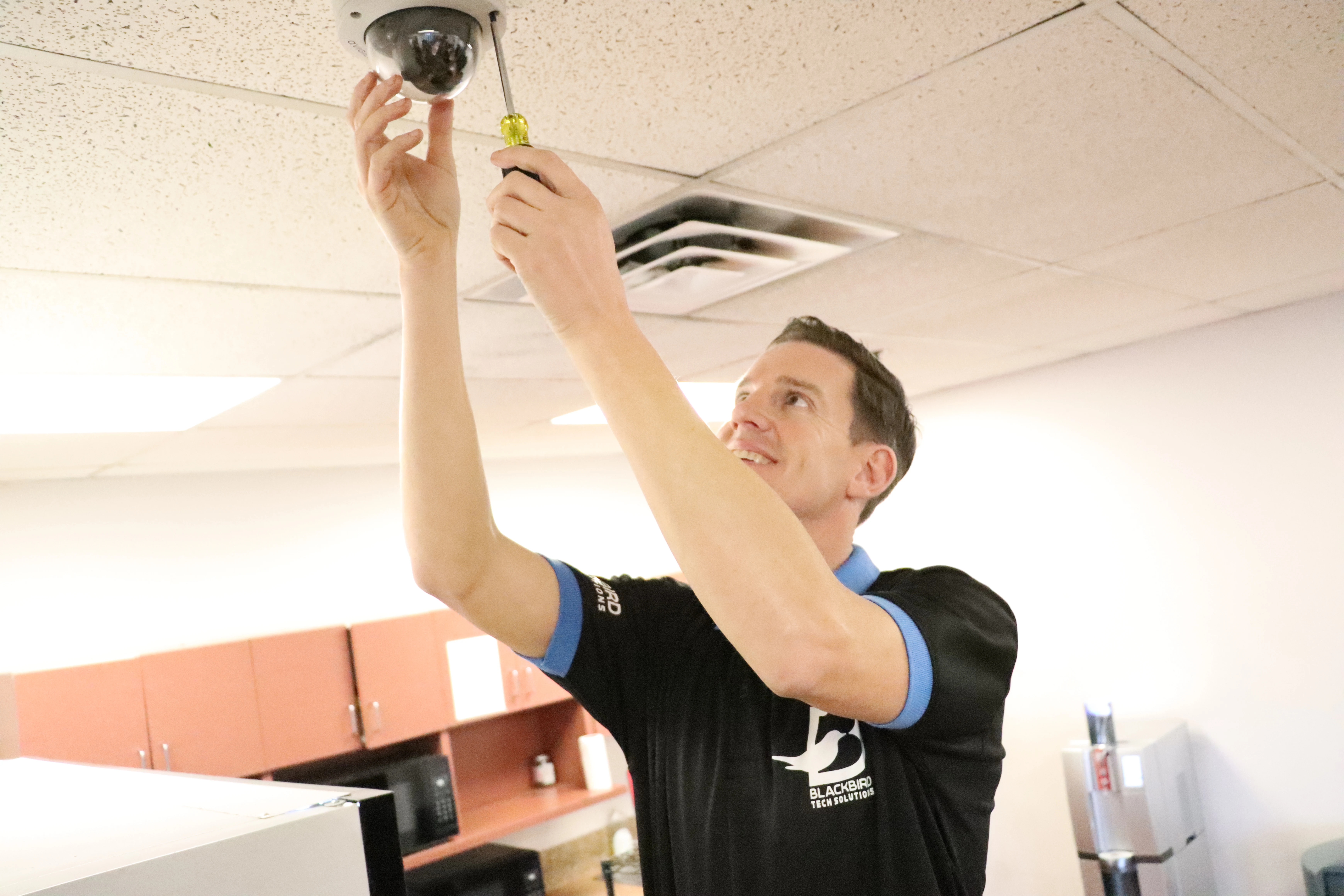
- IP cameras capture 4K footage and crisp images. Unlike older CCTV cameras, IP cameras transmit footage over a secure digital network rather than through cables to a DVR.
- Network video recorders (NVRs) securely store footage and allow authorized users to view it remotely from a phone or computer instead of having to be physically on site.
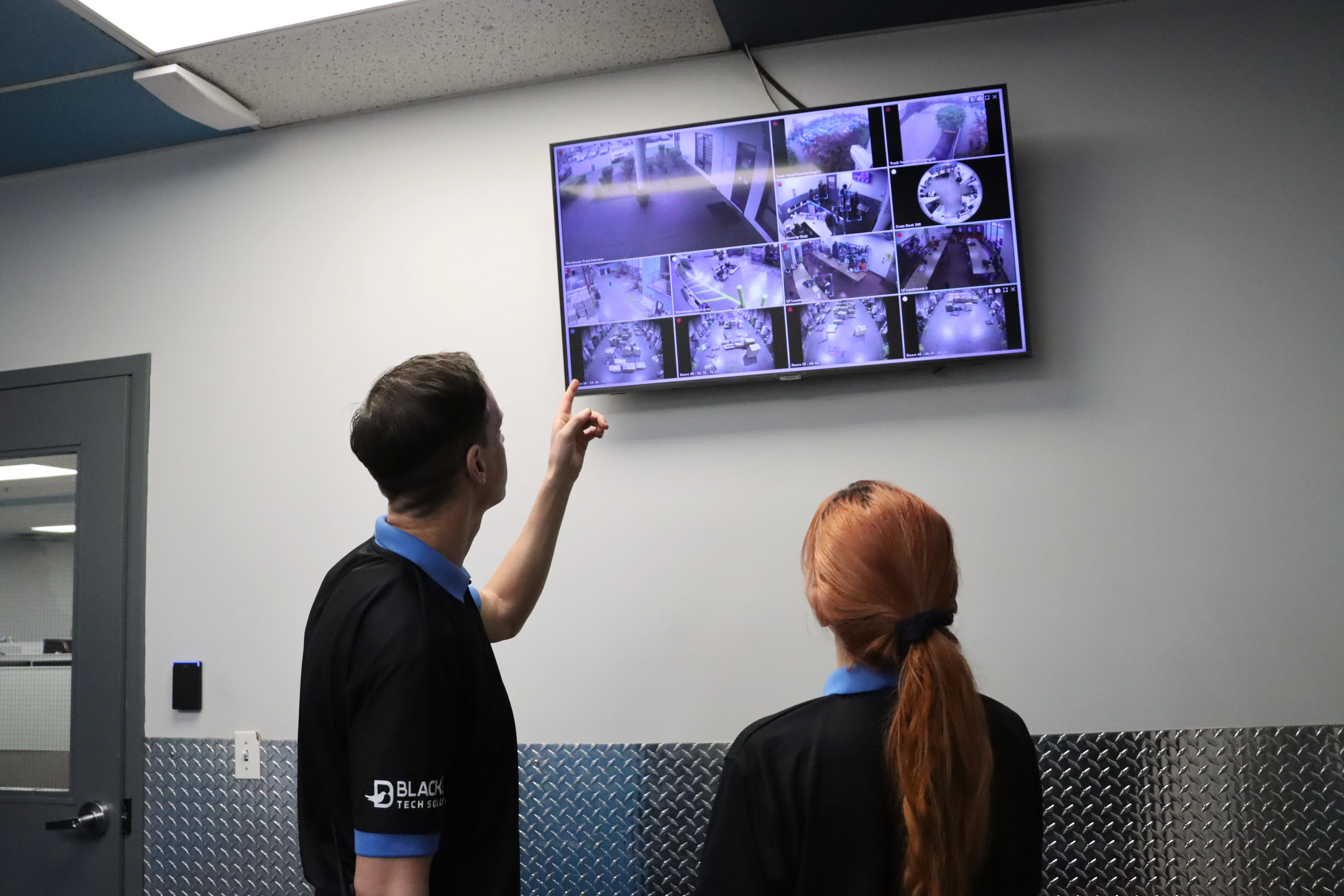
- AI-assisted monitoring analyzes footage in real time, identifying unusual activity, movement patterns, or specific triggers that a human operator might miss.
- Digital tripwires are virtual boundaries drawn around specific areas of your property. When a person or vehicle crosses one, an alert is sent to a monitoring team immediately.
- License plate recognition cameras automatically capture and log vehicle plates at entry and exit points, creating a record of vehicle movement.
- Live operator intervention means that when suspicious activity is detected, a real person can issue a live audio warning directly to the individual on site, often stopping an incident before it escalates.
Reactive vs. Proactive Security Camera Systems
The most important distinction between old and new commercial security camera systems comes down to timing.
Traditional CCTV only shows what happened after an incident. It’s a useful documentation tool, but it doesn’t stop crime. A shoplifter or vandal who knows a property only has basic recording cameras understands that the footage will only be reviewed if someone notices the damage or loss, which may not happen for hours or days. Meanwhile, a trespasser or vagrant passing through your property may never be caught if they leave no reason to check CCTV footage.
Modern commercial security cameras change all of this. Rather than reactively responding to incidents after the fact, they proactively prevent and address activity through:
- AI-assisted monitoring and digital tripwires that flag suspicious activity immediately, sending alerts to you or your monitoring team.
- Live operator intervention that mitigates incidents before they escalate.
- High-quality security cameras that are visible throughout your site, indicating that your property is being actively monitored.
This shift from reactive to proactive is what makes modern commercial security camera systems legitimately effective at preventing incidents instead of only documenting them.
What to Look for in a Commercial Security Camera Installer
Choosing the right commercial security camera installer is just as important as choosing the right equipment. The right provider for your property will design a system that takes into account your property’s specific layout, entry points, blind spots, and risk areas.
When evaluating a commercial security camera installer, look for:
- A thorough site assessment before any equipment is recommended or installed.
- Experience with properties similar in size, type, and industry to yours.
- Integration with live monitoring services.
- Ongoing support after installation.
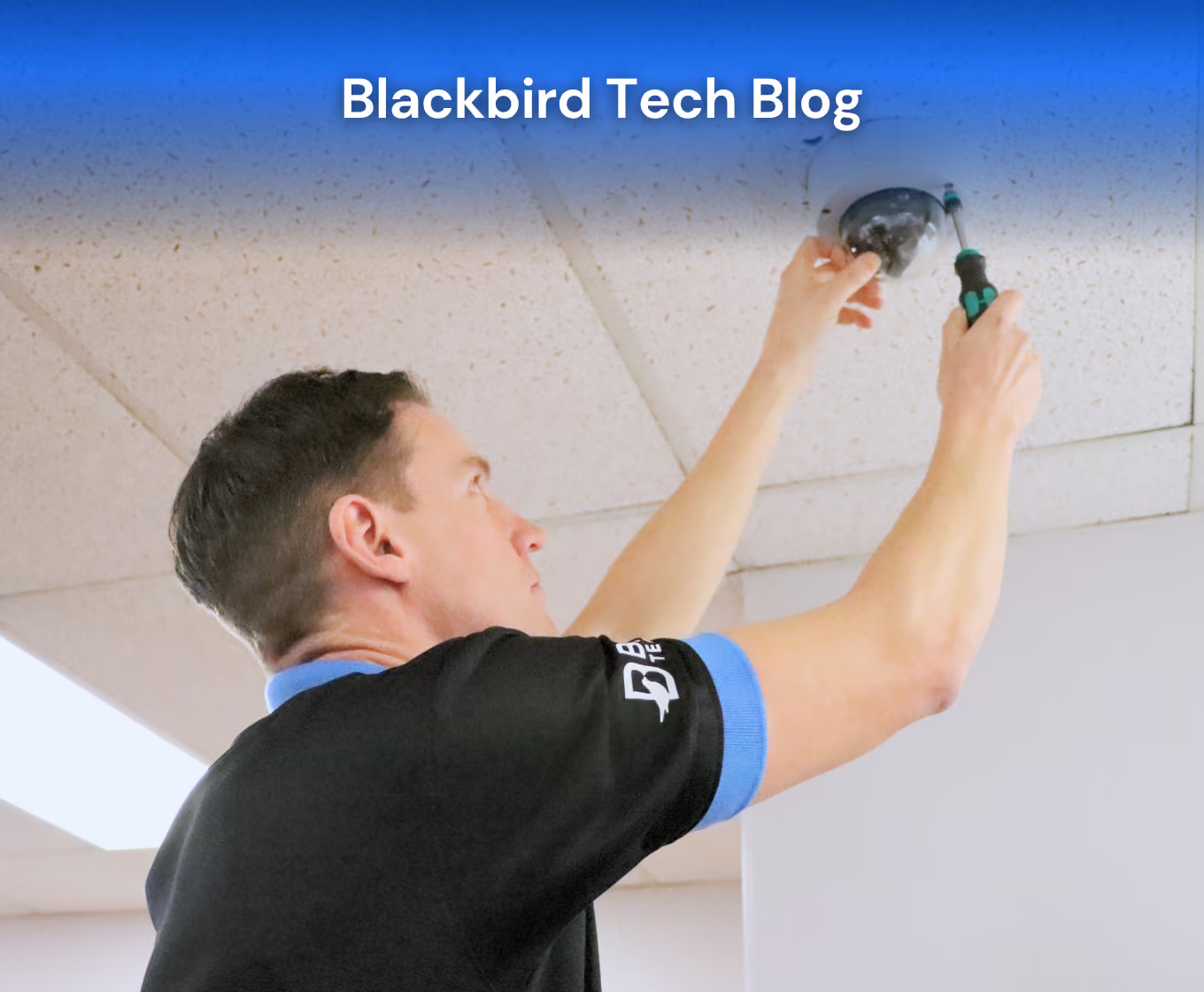
At Blackbird Tech, we begin every camera installation project with a professional site assessment that evaluates your property’s layout, risk areas, and existing infrastructure. From there, we design and install a system built around your property’s needs and connect it to our 24/7 monitoring platform.
Upgrade Your Commercial Security Camera System With Blackbird Tech
Whether you’re installing security cameras for the first time on a new property or upgrading an outdated CCTV system, you’ll benefit from a fully modernized, proactive surveillance system. Modern commercial security camera systems help prevent incidents, protecting your property and bottom line.
Contact us today to book a site assessment and find out what the right commercial security camera system looks like for your property.
Frequently Asked Questions About Commercial Security Cameras
How do security cameras work?
Security cameras record footage and send it to a recording device or monitoring platform. Traditional CCTV systems record footage so it can be reviewed later, while modern surveillance systems record footage and use AI-assisted monitoring, digital tripwires, and live operator intervention to detect and respond to suspicious activity in real time.
What is CCTV footage?
CCTV footage is video recorded by closed-circuit television (CCTV) cameras around a property and stored on a recording device. Modern surveillance camera systems store footage digitally, enabling remote access.
How long is CCTV footage kept?
Most CCTV systems retain footage for 30 to 90 days before overwriting it. The exact length of time depends on your system’s storage capacity and may also vary depending on your industry’s regulations and your organization’s policies.
What should I look for in a commercial security camera installer?
Look for an installer who conducts a site assessment before recommending equipment, has experience with properties similar to yours, and can integrate your camera system with a monitoring platform. Ongoing support after installation is also important to consider.

Plus d'articles
Foire aux questions
Les principaux KPI à suivre comprennent :
- Délais de réponse aux incidents : réponse plus rapide aux alarmes ou aux urgences.
- Réduction du vol et du vandalisme : comparer les données sur les pertes avant et après la mise en œuvre.
- Conformité des patrouilles : Suivez la fréquence et le respect des patrouilles au moyen du GPS ou des registres.
- Taux de fausses alarmes : Des taux plus bas permettent de mettre l'accent sur les menaces réelles.
- Satisfaction des clients/employés : Recueillir des commentaires pour mesurer la confiance à l'égard de la sécurité.
- Services à la clientèle : représentant de compte dédié qui répond aux besoins continus et peut ajuster la stratégie au besoin
- Permettre l'accès à notre centre de contrôle 24 heures sur 24, 7 jours sur 7 pour tous les clients, qui est basé à notre siège social à Vancouver, en Colombie-Britannique. Les clients peuvent appeler ce centre et faire en sorte qu'un gardien mobile soit rapidement déployé dans leur entreprise pour tout incident spontané qui se produit. Nous croyons qu'il faut l'exploiter en interne pour nous assurer que tous les services sont rationalisés et optimisés pour la meilleure communication. Pour les clients actuels, nous pouvons joindre notre centre de contrôle au numéro suivant : 1-888-991-2622.
- Nous avons une équipe dédiée au service à la clientèle qui communique directement avec les clients au quotidien. Nos services à la clientèle effectuent souvent des vérifications de site et peuvent vous aider à résoudre tout problème qui survient dans votre entreprise.
Votre tranquillité d'esprit est notre priorité. Nous sommes plus qu'un fournisseur de services — nous sommes un partenaire pour protéger votre entreprise. Grâce à notre équipe qui travaille sans relâche pour anticiper et résoudre les défis, vous pouvez vous concentrer sur la gestion de votre entreprise en toute confiance, sachant que nous sommes toujours là pour vous soutenir. Ensemble, nous bâtissons des environnements plus sécuritaires et des partenariats plus solides à chaque étape du processus.
Sécurisez vos opérations dès aujourd'hui