How Do Commercial Security Cameras Work?
We see commercial security cameras mounted on walls and ceilings at the businesses and public buildings we visit throughout our day. You might even have some installed at your business or property. But how do security cameras actually work? How are they best used? And what differentiates an older CCTV system from the modern, intelligent surveillance technology businesses are upgrading to in 2026?
This blog covers all of those questions and more to help you make a more informed decision about the right security camera system for your property.
Key Takeaways
- Traditional CCTV systems record footage passively, which is accessed after an incident.
- Modern commercial security cameras are proactive, using AI and real-time monitoring to detect and respond to live threats.
- A professionally installed commercial security camera system is designed around your property’s specific layout and risks, giving you the best coverage possible.
What Is CCTV Footage?
CCTV stands for closed-circuit television and refers to a video surveillance system in which cameras capture footage that is transmitted to a specific set of monitors or recording devices rather than being broadcast publicly. CCTV footage is the recorded video captured by these cameras.
For decades, CCTV was the standard approach to commercial surveillance. Cameras would record continuously to tapes or hard drives, and the footage would be reviewed manually if and when an incident occurred. It was useful for documentation and investigations, but outside of deterring potential threats through well-placed cameras, it wasn’t designed to prevent crime.
Addressing concerns in real time is the primary limitation of traditional CCTV, and it’s what modern commercial security camera systems were created to address.
How Traditional CCTV Systems Work
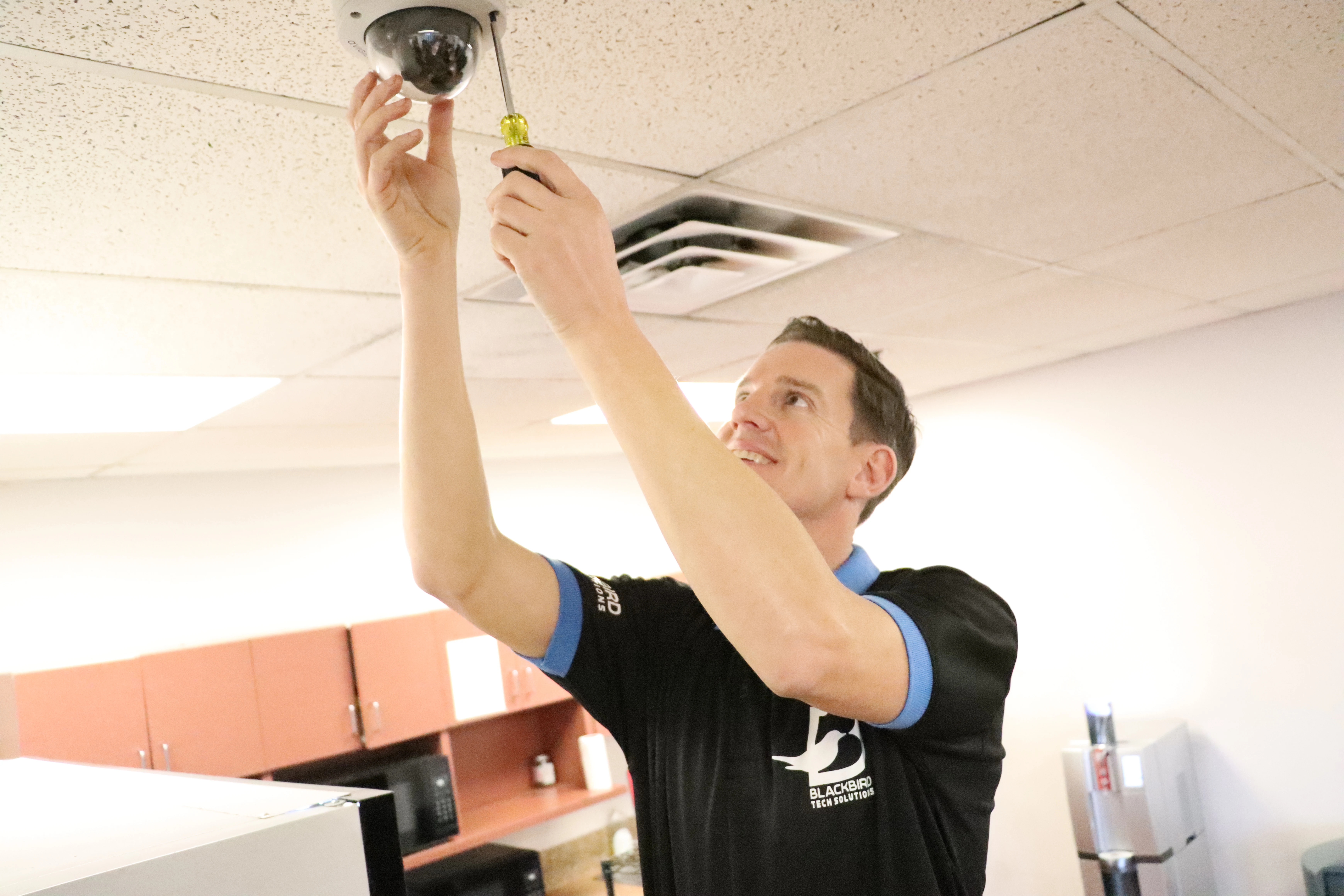
If you have a CCTV system at your business, chances are that you already know how traditional CCTV systems work. They use cameras to capture video, which is transmitted to a recording device and stored for later review. Here’s a breakdown:
- Cameras are installed at key points around a property and capture continuous video footage.
- That footage is transmitted via cables to a digital video recorder (DVR), where it’s stored.
- If an incident occurs, security staff or management review the recorded footage to find out what happened. This footage may be shared with law enforcement or insurance companies, depending on the nature of the incident.
- Footage captured by traditional systems must be viewed from a local monitor and is typically stored for a set period of time before being overwritten by new recordings.
This approach is reactive by nature (as in, it reacts to incidents). The camera records what happens, but the system isn’t able to flag suspicious activity, send out alerts, or manage the situation in any capacity. By the time the footage is reviewed, the incident is well over.
This poses a problem when incidents, such as break-ins, occur overnight when team members and security personnel have gone home for the day. This is where CCTV systems have gotten a major upgrade in recent years.
How Modern Commercial Security Cameras Work
Modern commercial security camera systems operate differently from traditional CCTV systems. Rather than passively recording footage for later review, today’s systems are designed to actively monitor your property and respond to potential threats in real time, in addition to recording. This gives them a proactive edge that helps stop crime as it unfolds.
Here’s an overview of what goes into a security camera system in 2026:
- IP cameras capture 4K footage and crisp images. Unlike older CCTV cameras, IP cameras transmit footage over a secure digital network rather than through cables to a DVR.
- Network video recorders (NVRs) securely store footage and allow authorized users to view it remotely from a phone or computer instead of having to be physically on site.
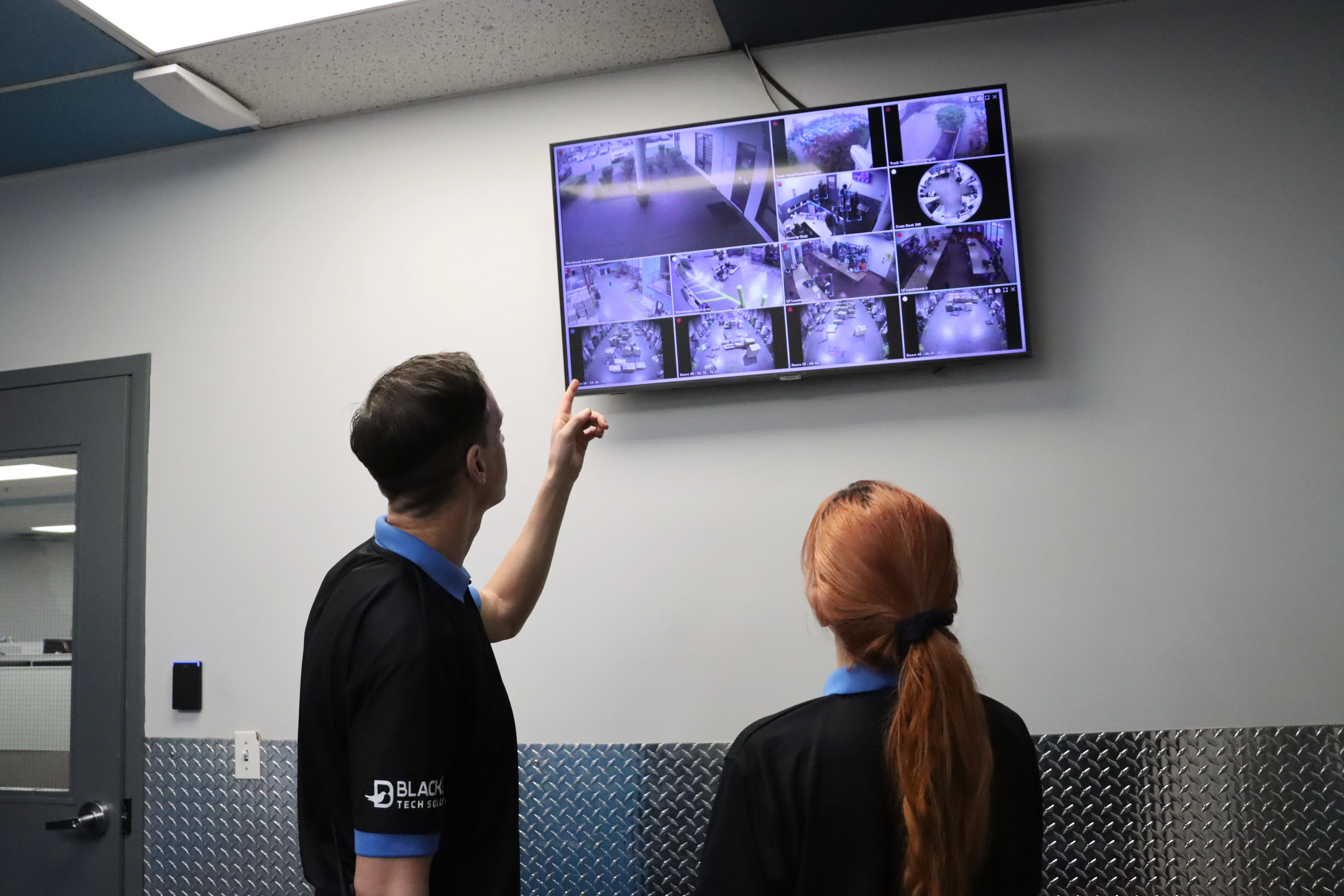
- AI-assisted monitoring analyzes footage in real time, identifying unusual activity, movement patterns, or specific triggers that a human operator might miss.
- Digital tripwires are virtual boundaries drawn around specific areas of your property. When a person or vehicle crosses one, an alert is sent to a monitoring team immediately.
- License plate recognition cameras automatically capture and log vehicle plates at entry and exit points, creating a record of vehicle movement.
- Live operator intervention means that when suspicious activity is detected, a real person can issue a live audio warning directly to the individual on site, often stopping an incident before it escalates.
Reactive vs. Proactive Security Camera Systems
The most important distinction between old and new commercial security camera systems comes down to timing.
Traditional CCTV only shows what happened after an incident. It’s a useful documentation tool, but it doesn’t stop crime. A shoplifter or vandal who knows a property only has basic recording cameras understands that the footage will only be reviewed if someone notices the damage or loss, which may not happen for hours or days. Meanwhile, a trespasser or vagrant passing through your property may never be caught if they leave no reason to check CCTV footage.
Modern commercial security cameras change all of this. Rather than reactively responding to incidents after the fact, they proactively prevent and address activity through:
- AI-assisted monitoring and digital tripwires that flag suspicious activity immediately, sending alerts to you or your monitoring team.
- Live operator intervention that mitigates incidents before they escalate.
- High-quality security cameras that are visible throughout your site, indicating that your property is being actively monitored.
This shift from reactive to proactive is what makes modern commercial security camera systems legitimately effective at preventing incidents instead of only documenting them.
What to Look for in a Commercial Security Camera Installer
Choosing the right commercial security camera installer is just as important as choosing the right equipment. The right provider for your property will design a system that takes into account your property’s specific layout, entry points, blind spots, and risk areas.
When evaluating a commercial security camera installer, look for:
- A thorough site assessment before any equipment is recommended or installed.
- Experience with properties similar in size, type, and industry to yours.
- Integration with live monitoring services.
- Ongoing support after installation.
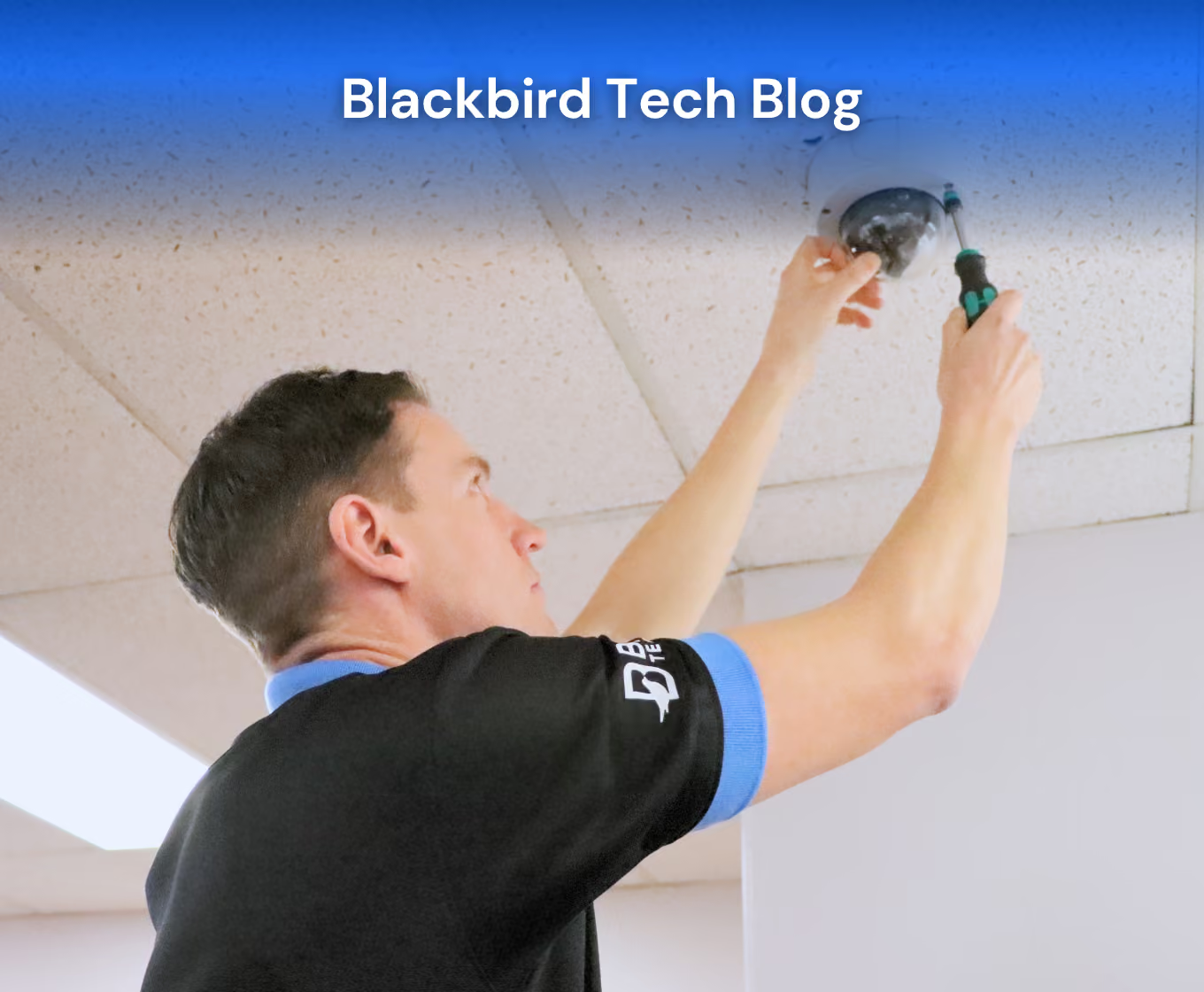
At Blackbird Tech, we begin every camera installation project with a professional site assessment that evaluates your property’s layout, risk areas, and existing infrastructure. From there, we design and install a system built around your property’s needs and connect it to our 24/7 monitoring platform.
Upgrade Your Commercial Security Camera System With Blackbird Tech
Whether you’re installing security cameras for the first time on a new property or upgrading an outdated CCTV system, you’ll benefit from a fully modernized, proactive surveillance system. Modern commercial security camera systems help prevent incidents, protecting your property and bottom line.
Contact us today to book a site assessment and find out what the right commercial security camera system looks like for your property.
Frequently Asked Questions About Commercial Security Cameras
How do security cameras work?
Security cameras record footage and send it to a recording device or monitoring platform. Traditional CCTV systems record footage so it can be reviewed later, while modern surveillance systems record footage and use AI-assisted monitoring, digital tripwires, and live operator intervention to detect and respond to suspicious activity in real time.
What is CCTV footage?
CCTV footage is video recorded by closed-circuit television (CCTV) cameras around a property and stored on a recording device. Modern surveillance camera systems store footage digitally, enabling remote access.
How long is CCTV footage kept?
Most CCTV systems retain footage for 30 to 90 days before overwriting it. The exact length of time depends on your system’s storage capacity and may also vary depending on your industry’s regulations and your organization’s policies.
What should I look for in a commercial security camera installer?
Look for an installer who conducts a site assessment before recommending equipment, has experience with properties similar to yours, and can integrate your camera system with a monitoring platform. Ongoing support after installation is also important to consider.

More Articles
Frequently Asked Questions
Key KPIs to track include:
- Incident response times: Faster responses to alarms or emergencies.
- Reduction in theft/vandalism: Compare loss data before and after implementation.
- Patrol compliance: Track patrol frequency and adherence via GPS or logs.
- False alarm rates: Lower rates ensure focus on real threats.
- Client/Employee satisfaction: Gather feedback to measure confidence in security.
- Client services: Dedicated account representative who supports ongoing needs & can adjust strategy as needed
- Allowing access to our 24/7 Control centre for all clients, which is based out of our head office in Vancouver, BC. Clients can call this centre and have a mobile guard swiftly deployed to their business for any spontaneous incidents that occur. We believe in operating it inhouse to ensure all services are streamlined and optimized for the best communication. Our control canter can be reached at this number for current clients: 1-888-991-2622.
- We have a dedicated client services team which directly communicates with clients on a day-to-day basis. Our client services often perform site check ups and can assist with any issues that arise at your business.
Your peace of mind is our priority. We’re more than a service provider—we’re a partner in protecting your business. With our team working tirelessly to anticipate and resolve challenges, you can focus on running your business with confidence, knowing we’re always here to support you. Together, we build safer environments and stronger partnerships, every step of the way.
Secure Your Operation Today