
Top 5 Things I Learned at NRF Protect 2026 (Without Ever Leaving My Booth)
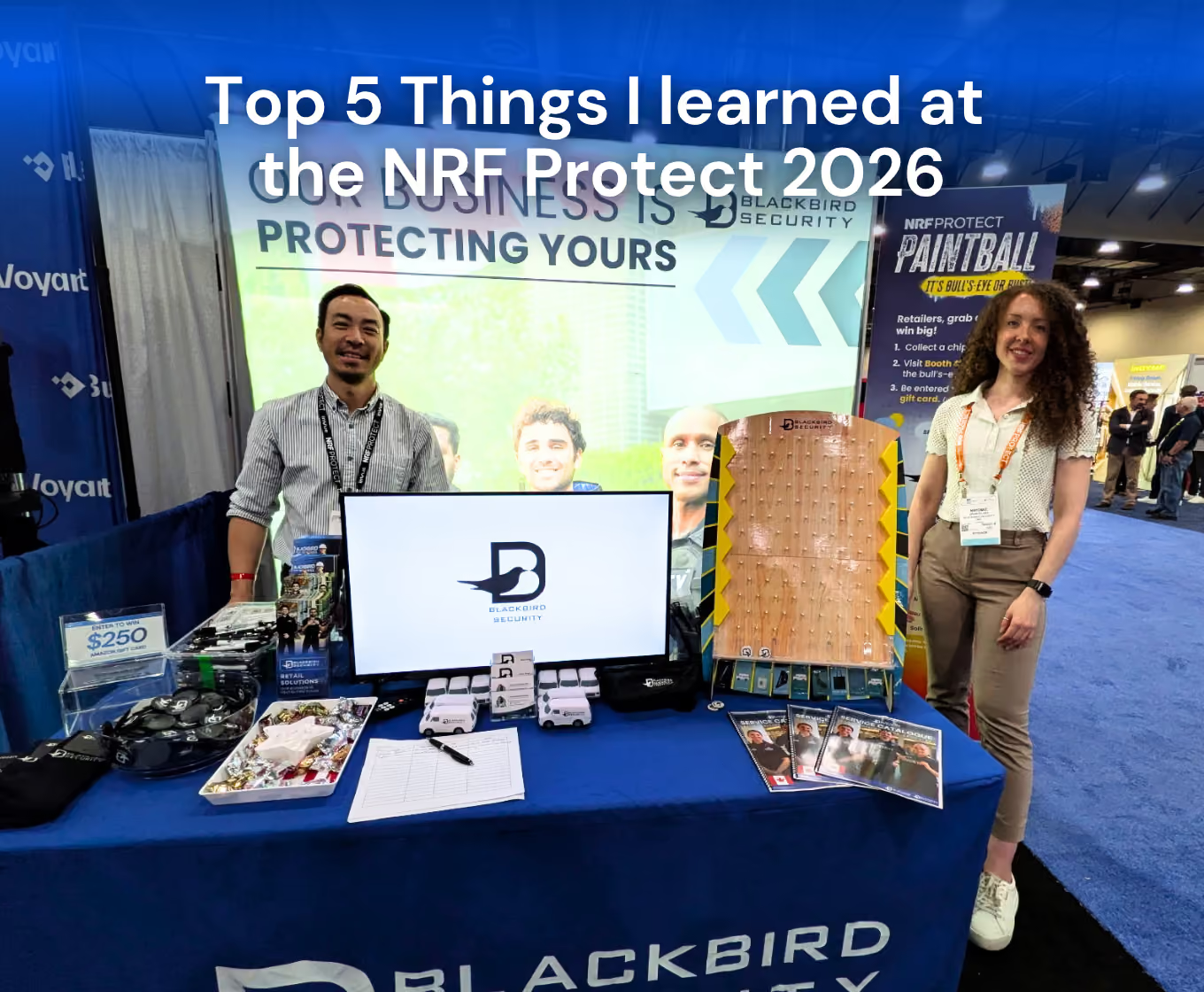
Okay, I have a confession to make.
I just got back from NRF Protect 2026 in Grapevine, Texas, and despite spending several days at one of the retail industry's biggest events, I didn't attend a single conference session.
Between booth duty, networking events, and catching up with our retail partners, I barely had time to walk the show floor, let alone sit in a session. At first, I felt like I had missed out.
But as I reflected on the week, I realized something interesting: some of the best insights didn't come from a keynote stage. They came from conversations.
Over the course of a few days, I spoke with loss prevention professionals, security leaders, retailers, technology providers, law enforcement professionals, and many others. After hearing many of the same themes come up again and again, I walked away with a pretty good sense of what is top of mind for the retail security industry right now.
Here are the five biggest takeaways I learned.
1. Security Teams Are Being Asked to Do More Than Just Prevent Loss
One thing that really stood out to me was how much the role of retail security continues to evolve.
Years ago, most conversations centred around shrinkage, theft, and investigations. Those topics are still important, of course, but they're no longer the entire story.
I heard a lot of people talking about how security teams are helping drive broader business decisions. The data collected through cameras, incident reports, access control systems, and other technologies is being used in ways that extend well beyond traditional security guards.
It feels like the industry is moving away from the idea of security as a department that simply responds to problems and toward security as a team that helps the business operate more effectively.
That's a pretty significant shift.
2. Organized Retail Crime Is Still Keeping People Up at Night
If there was one topic that came up consistently, it was the continuing impact of organized retail crime (ORC).
No matter who I spoke with, ORC seemed to be near the top of their list of concerns.
What struck me most was how much more sophisticated these criminal operations have become. Retailers aren't just dealing with isolated theft incidents anymore. Many are facing coordinated groups that operate across multiple stores, regions, and even provinces or states.
The challenge isn't simply stopping individual incidents. It's identifying connections, spotting patterns, and understanding the bigger picture.
I also noticed a growing sense that no retailer can solve this problem alone.
Many of the conversations I had focused on collaboration: sharing intelligence, working with law enforcement, partnering with other retailers, and finding ways to connect information that might otherwise remain siloed.
The problem is complex, but there seems to be a growing recognition that ongoing collaboration and constant communication are some of the most effective tools available to combat this worrying trend.
3. The Walls Between Departments Are Coming Down
Another theme that came up repeatedly was convergence.
Now, I'll admit that "convergence" isn't exactly the most exciting conference buzzword, but the concept behind it is important.
The reality is that today's risks don't fit neatly into organizational charts.
A cyber incident can quickly become a physical security issue. Workplace safety concerns can affect operations. Fraud investigations often involve both digital and physical evidence.
Because of that, many organizations are working more closely across departments than ever before.
Security teams are collaborating with IT. Loss prevention is working alongside operations. Risk management, compliance, and security are increasingly aligned around common goals.
Several people I spoke with described this as less of a future trend and more of a current reality.
The organizations making the most progress seem to be the ones breaking down internal silos and looking at risk through a wider lens.
4. People Are Becoming the Centre of Security Conversations
As a human being who has certain reservations about AI, the focus on “people” may have been the most encouraging trend I noticed all week.
For years, retail security conversations often revolved around protecting products and reducing losses. This year, I heard more talk about protecting people.
Employee safety came up repeatedly. Workplace violence prevention came up repeatedly. Creating safer environments for frontline staff came up repeatedly. All of this was incredibly refreshing to hear and to know that we haven’t lost our humanity!
Retail employees are dealing with challenges that extend far beyond traditional customer service responsibilities. Many organizations are recognizing that security investments can play a meaningful role in supporting employee well-being and confidence.
When employees feel safe, everyone benefits. Stores operate more effectively. Customer experiences improve. Teams perform better and are happier to come to work.
It's easy to focus on technology at events like NRF Protect, but many of the conversations that stuck with me most were ultimately about people.
5. AI Conversations Have Finally Become Practical
Lastly, I’m addressing the elephant in the room. Artificial intelligence.
If I had a dollar for every AI conversation I had this week, I probably could have paid for my trip. It felt like nearly every vendor at NRF Protect had some sort of small or large AI integration with their core business. And rightfully so.
The interesting part, though, was that the conversations felt different from what I've heard over the last couple of years. Not long ago, AI discussions tended to focus on what might be possible someday. This year, people seemed much more interested in what is actually working right now.
And that’s a huge shift in such a short amount of time.
Retailers are really wanting to know what AI is capable of and are asking some crucial, practical questions:
- Can AI help detect patterns in customer behaviour that identify how likely it is or isn’t for someone to attempt a theft?
- Can AI help investigators find relevant footage faster?
- Can AI reduce the amount of time spent reviewing store footage?
- Can AI make teams more efficient?
Those are very different conversations from the broad "AI will change everything someday" discussions that dominated previous events.
What I found encouraging is that most people aren't viewing AI as a replacement for security guards. Instead, they're looking at it as a way to eliminate repetitive tasks, so people can focus on the work that actually requires experience, judgment, and context.
In other words, the hype seems to be giving way to real-world applications.
My Biggest Takeaway
As I flew home from Texas, I found myself thinking about something that came up throughout the week.
Retail security is becoming less about reacting to incidents and more about producing better outcomes.
Whether the conversation was about AI, organized retail crime, workplace safety, or more efficient business operations, the common thread was that security teams are being asked to create value in new ways.
And honestly, that's exciting.
So, while I may not have made it to the conference sessions this year, I still came away with plenty to think about. Sometimes the most valuable part of an event isn't what's happening on stage; it's the conversations happening between meetings, in booth aisles, and with the people working through these challenges every day.
For me, those conversations made NRF Protect 2026 well worth the trip.
If you would like to learn more about how Blackbird Security can help improve your retail business operations, contact us today.

More Articles
Frequently Asked Questions
Key KPIs to track include:
- Incident response times: Faster responses to alarms or emergencies.
- Reduction in theft/vandalism: Compare loss data before and after implementation.
- Patrol compliance: Track patrol frequency and adherence via GPS or logs.
- False alarm rates: Lower rates ensure focus on real threats.
- Client/Employee satisfaction: Gather feedback to measure confidence in security.
- Client services: Dedicated account representative who supports ongoing needs & can adjust strategy as needed
- Allowing access to our 24/7 Control centre for all clients, which is based out of our head office in Vancouver, BC. Clients can call this centre and have a mobile guard swiftly deployed to their business for any spontaneous incidents that occur. We believe in operating it inhouse to ensure all services are streamlined and optimized for the best communication. Our control canter can be reached at this number for current clients: 1-888-991-2622.
- We have a dedicated client services team which directly communicates with clients on a day-to-day basis. Our client services often perform site check ups and can assist with any issues that arise at your business.
Your peace of mind is our priority. We’re more than a service provider—we’re a partner in protecting your business. With our team working tirelessly to anticipate and resolve challenges, you can focus on running your business with confidence, knowing we’re always here to support you. Together, we build safer environments and stronger partnerships, every step of the way.
Secure Your Operation Today